New sodium-ion cell targets large-scale energy storage with wide temperature tolerance, high power output and improved safety, positioning sodium as a complementary chemistry to lithium in emerging grid and AI-driven power markets.
Envision Power (also known as Envision AESC), the global battery manufacturing arm of China’s renewable energy enterprise Envision Group, has rolled out its first sodium-ion battery cell designed specifically for energy storage applications, marking the company’s formal entry into the commercial-scale sodium battery market.
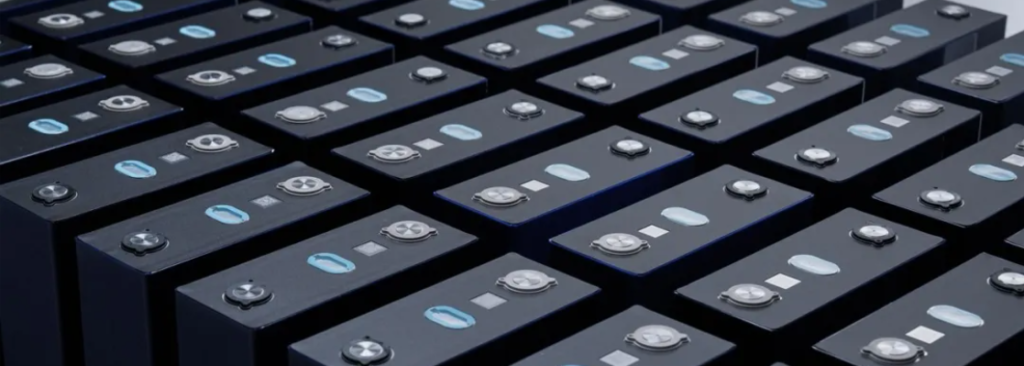
The product launch represents a significant milestone for sodium-ion technology, which has long been viewed as a potential complement to lithium-based batteries. With the new cell now moving into production, Envision aims to accelerate deployment across grid storage, distributed energy systems, and emerging power-intensive applications such as AI data infrastructure.
More broadly, the development highlights a growing industry shift toward diversified battery chemistries, as global electricity systems grapple with supply chain constraints, cost volatility, and increasingly complex operating environments.
First sodium-ion storage cell enters production
On March 5, Envision Power announced that its first dedicated sodium-ion energy storage battery cell has successfully rolled off the production line, marking the beginning of commercialization for the technology within the company’s product portfolio.
The launch follows nearly two decades of battery research and manufacturing experience by Envision, which has built a portfolio spanning multiple chemistries, including ternary lithium batteries, lithium iron phosphate (LFP), sodium-ion and emerging module-to-pack (MTP) systems. Its Jiangyin factory uses 46-series cylindrical cells compatible with MTP-like setups for BMW supply.
While lithium-ion technologies continue to dominate global storage markets, sodium-ion batteries are gaining increasing attention as an alternative for stationary storage, where energy density constraints are less critical than cost, durability and safety.
For Envision, the sodium product is positioned not as a replacement but as a complementary chemistry within a broader “lithium–sodium synergy” strategy. The approach allows system integrators and energy developers to deploy different battery technologies depending on operating conditions, temperature requirements, and cost structures.
The announcement also builds on the company’s rapid expansion in lithium storage technologies. In 2025, Envision Power became one of the first manufacturers to mass-produce large-format LFP cells exceeding 500Ah and 700Ah capacities, helping to reduce system-level costs for utility-scale battery storage projects.
To date, the company has delivered more than 100GWh of energy storage battery cells globally, supporting a growing pipeline of grid-scale projects.
Sodium-ion battery: wide temperature range and high-rate performance
The newly launched sodium-ion battery cell is designed specifically for grid-scale storage environments where performance stability across varying operating conditions is critical. The cell’s key performance characteristics include:
- Ultra-wide operating temperature range, enabling stable performance in both low and high temperatures
- High power capability, supporting rapid charge and discharge rates
- Improved intrinsic safety, addressing thermal risks associated with battery systems
- Competitive energy density and efficiency compared with other sodium-ion products currently available
Sodium-ion batteries use sodium instead of lithium as the charge carrier, which is seen as a lower-cost option for large-scale energy storage. Their lower energy density makes them better suited to stationary applications such as grid storage and renewable integration.
Envision’s design emphasizes temperature resilience, addressing two persistent challenges in battery storage systems:
- Low-temperature performance degradation, which reduces battery activity and efficiency in cold climates
- High-temperature safety risks, which can increase the likelihood of thermal runaway events
By maintaining stable electrochemical performance across a broad temperature spectrum, sodium-ion systems could reduce the need for complex thermal management infrastructure in storage installations. This feature is particularly valuable in regions with harsh winters or highly variable climates.
Targeting AI data centres and distributed energy
From a commercial perspective, the sodium-ion launch aligns with a rapidly expanding market for grid-scale battery storage. Several Chinese battery manufacturers are accelerating development in the field, including Wuxi-based Pangu New Energy, which has ramped up sodium-ion battery production as demand surges.
Global installed battery storage capacity is expected to exceed 1TWh by the early 2030s, according to projections from the International Energy Agency, driven by rising renewable penetration and the electrification of industrial systems.
Within that market, several new demand segments are emerging. One of the most prominent is AI data centre infrastructure (AIDC). The rapid growth of large-scale computing clusters used to train and operate advanced AI models is dramatically increasing electricity demand and requiring highly reliable backup and load-balancing power systems.
Energy storage is becoming a critical component of this infrastructure. Sodium-ion batteries could offer advantages in these environments because they:
- Operate reliably across wider temperature ranges
- Tolerate high charge–discharge cycles
- Reduce dependence on lithium supply chains
Beyond AI infrastructure, Envision also highlighted several additional application areas:
- Cold-climate energy storage, where lithium batteries can experience reduced performance
- Distributed energy systems, including microgrids and industrial backup power
- Renewable energy integration, particularly wind and solar output smoothing
Diversification of battery chemistry
The launch reflects a broader strategic shift across the battery industry toward multi-chemistry portfolios. For much of the past decade, the market consolidated around lithium-ion technologies, particularly nickel-rich chemistries for electric vehicles and LFP batteries for stationary storage.
But as demand accelerates across sectors including electric mobility, grid storage and AI computing, manufacturers are increasingly exploring alternative chemistries to reduce supply-chain risk and optimize system performance.
Analysts increasingly view sodium batteries as a “third pillar” of the global battery ecosystem alongside LFP and high-nickel lithium chemistries. In value-chain terms, sodium-ion batteries offer several potential advantages:
- Raw material availability: sodium resources are globally abundant
- Cost stability: lower exposure to critical mineral price volatility
- Manufacturing compatibility: many production processes can leverage existing lithium-ion infrastructure
If these advantages translate into commercial cost reductions at scale, sodium-ion batteries could capture a meaningful share of the stationary storage market.
Outlook: Li–Na hybrid energy systems
For Envision Power, the long-term strategy centres on lithium–sodium hybrid energy systems. Under this model, energy storage developers could deploy:
- LFP batteries for high-energy applications requiring compact systems
- Sodium-ion batteries for high-power, temperature-resilient grid storage
Such diversification may become increasingly important as energy systems evolve toward higher renewable penetration and more complex demand patterns.
The company’s latest product launch suggests sodium-ion technology is beginning to transition from laboratory research to industrial deployment. If manufacturing costs decline and performance continues to improve, sodium-ion batteries could soon become a standard component of next-generation energy storage infrastructure.