A new shipping link to Antwerp highlights Jiangyin’s strategy to integrate advanced manufacturing with global logistics, strengthening China–EU trade flows and supply chain connectivity between the Yangtze River Delta and European markets.
On March 16, the Singapore-flagged container vessel Tianlu departed Jiangyin Sunan International Container Terminal on the Yangtze River, inaugurating a direct shipping route between Jiangyin, Wuxi, in eastern China and the Port of Antwerp in Belgium.
The voyage marks Jiangyin Port’s first new international trade route of 2026 and reflects a broader push to connect the manufacturing heartland of the Yangtze River Delta more directly with European markets.
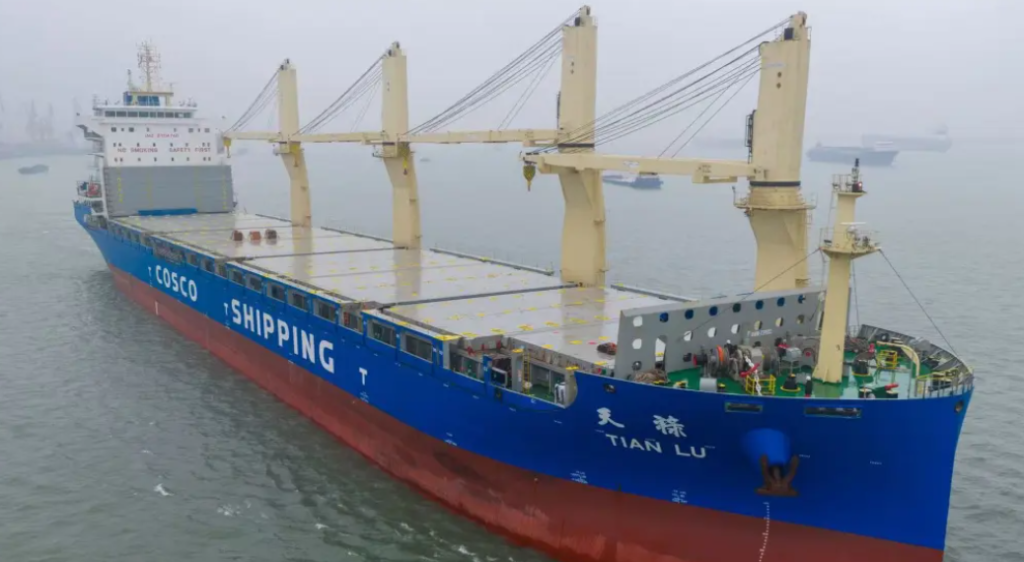
The vessel, measuring 189.9 metres in length and 28.5 metres in width, sailed with 365 specialized containers carrying more than 2,300 tonnes of high-value cargo, including high-end equipment and precision instruments. The journey is expected to take about 55 days before arriving at the Port of Antwerp.
Unlike conventional shipping routes that rely on transshipment through coastal mega-ports, the new service establishes a point-to-point maritime corridor linking the Yangtze River Delta hinterland with Antwerp, one of Europe’s largest logistics gateways.
For exporters across Jiangsu province and the wider Yangtze River Delta, the route promises tangible efficiency gains. According to local authorities, bypassing intermediate ports could reduce port operating costs by 20–30% while shortening transit times for specialized cargo shipments to Europe.
A direct link to Europe’s logistics network
The route connects two strategically positioned ports within their respective regional economies. Jiangyin Port functions as a critical river–sea transport hub serving the industrial clusters of the Yangtze River Delta, while Antwerp is a key entry point for goods entering continental Europe.
The service is designed primarily for specialized cargo trade between China and Europe, including industrial equipment, precision machinery, and advanced components. The inaugural shipment reflected this focus, consisting largely of high-value goods tied to sectors such as industrial automation, advanced manufacturing, and instrumentation.
Operational efficiency has also been prioritized. Jiangyin’s border inspection authorities streamlined clearance procedures for the inaugural voyage, enabling the vessel to begin operations immediately upon docking and depart without delay. Such measures are increasingly important as inland river ports compete for international cargo flows.
Port officials expect the service to evolve into a regular route, potentially expanding beyond specialized cargo to support exports from industries including machinery, automotive manufacturing, and electronics. Over time, the route may extend its coverage to additional destinations in Europe and Africa.
Parallel push into the space economy
The new shipping corridor coincides with a broader industrial transformation underway in Jiangyin and the Wuxi area, particularly in the commercial space sector. Jiangyin is a county-level city under Wuxi’s administration.
As early as 2012, Wuxi strategically positioned itself within China’s “two engines” (aero-engine and gas turbine) industrial chain. A group of local companies, such as Wuxi Hyatech, helped lay the groundwork for entry into the commercial space industry. This long-term strategic focus has continued through the development of Wuxi’s “4+6+5” modern industrial cluster system, in which commercial space has been designated as one of the first future industries.
From concept to scale in just a few years, Wuxi has rapidly built a sizable commercial space ecosystem. The city is now home to 325 enterprises across the industry chain, including 14 national-level “specialized and innovative” companies and three listed companies.
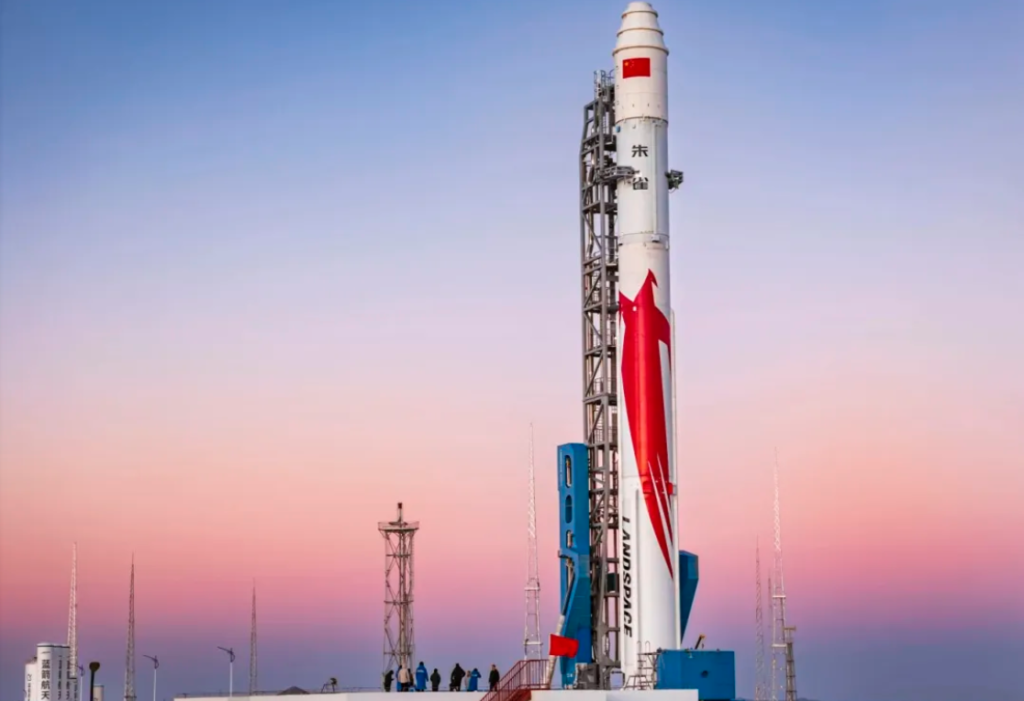
Notably, four of China’s top ten private commercial space companies (LandSpace, Space Pioneer, Orienspace, and Deep Blue Aerospace) have established operations in Wuxi. The cluster also participates in multiple national mega-constellation projects, forming an integrated development model characterized by “satellite–rocket coordination, chip–network integration, scenario-driven applications, and ecosystem building.”
Rocket manufacturing meets river logistics
Within this broader ecosystem, Jiangyin is advancing a major industrial project: the construction of a large-scale rocket research and manufacturing facility. Described locally as a “rocket dream factory,” the project represents an investment of CNY 2 billion and will focus on the development and production of two liquid-fuel launch vehicles: Feiyan-1 and Feiyan-2.
The rockets are designed to rank among the highest-thrust launch vehicles currently under development in China’s commercial space sector. Their design incorporates multiple lightweight structural technologies intended to reduce overall mass while maintaining structural integrity.
By commercial launch standards, the vehicles will be exceptionally large. The Feiyan launch vehicle is expected to reach nearly 100 metres in height, comparable to stacking four high-speed rail carriages vertically. Its maximum diameter of 6.5 metres is roughly equivalent to the width of two high-speed trains positioned side by side.
The scale of the launch vehicles was a key factor in selecting Jiangyin as the project site. Transporting rockets approaching 100 metres in height and more than six metres in diameter by road or rail would be highly impractical. Such dimensions exceed the limits of most terrestrial transport networks and would require complex and costly logistics arrangements.
Jiangyin’s location along the Yangtze River, however, offers a clear advantage. Large rocket stages assembled at the facility can be transported directly by water to launch sites, avoiding the constraints of overland transport.
This approach mirrors logistics strategies used by major global space programs. Components of Europe’s Ariane launch vehicles, for example, are transported by specialized ships, while the United States historically relied on barges to move Saturn V rocket stages during the Apollo era.
Building an integrated industrial ecosystem
Together, the new shipping route and the expansion of the commercial space industry illustrate a broader industrial strategy emerging in Jiangyin and the Wuxi area.
Ports historically associated with bulk cargo and container throughput are increasingly repositioning themselves as integrated industrial platforms. By linking advanced manufacturing clusters with global logistics networks, cities aim to capture more value across the supply chain—from production and assembly to export logistics.
For Jiangyin, the Antwerp shipping link strengthens its position as a gateway connecting inland Chinese manufacturing with European markets. At the same time, its integration into Wuxi’s rapidly growing commercial space ecosystem signals ambitions to participate in China’s expanding space economy.
China’s private launch sector has accelerated in recent years, driven by rising demand for satellite deployment, Earth observation, and communication infrastructure. Large liquid-fuel rockets with higher thrust capacity could play a key role in launching heavier payloads and supporting emerging satellite constellations.
Industrial and logistics outlook
Taken together, these developments reflect a strategy that combines advanced manufacturing, logistics infrastructure, and emerging technology sectors.
The Jiangyin–Antwerp shipping corridor enhances connectivity between China’s industrial heartland and Europe’s logistics network, potentially lowering costs and improving reliability for specialized cargo. Meanwhile, the growth of Wuxi’s commercial space cluster—and Jiangyin’s role within it—positions the region within the upstream segment of the global space economy, where manufacturing scale, supply chain integration, and specialized logistics capabilities are essential.
Jiangyin, historically an inland industrial city, is evolving beyond its traditional role as a production base. Increasingly, it is becoming a globally connected technology and logistics hub, linking regional manufacturing strengths with international trade and next-generation industries.