Spring Special Report IV: Momentum, Prestige, and Global Reach
Record participation, an iconic lakeside course, and the presence of globally prominent scientists underscore how Wuxi is integrating sport, landscape, and intellectual capital to reinforce its 3,000-year cultural legacy and modern influence.
Wuxi’s annual marathon has evolved into far more than a mass sporting event. This year’s race, staged along the shores of Taihu Lake, attracted over 35,000 runners from nearly 500,000 applicants, setting a new benchmark for participation in China and globally.
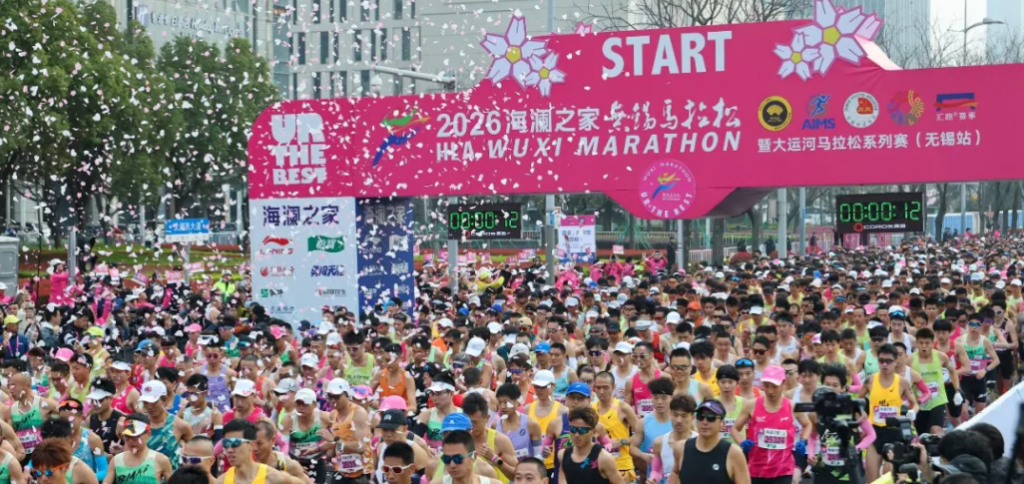
Beyond its scale, the event increasingly reflects the city’s defining strengths: a seamless blend of natural beauty, cultural identity, and high-profile participation. Together, these elements position Wuxi as both highly livable and globally aspirational.
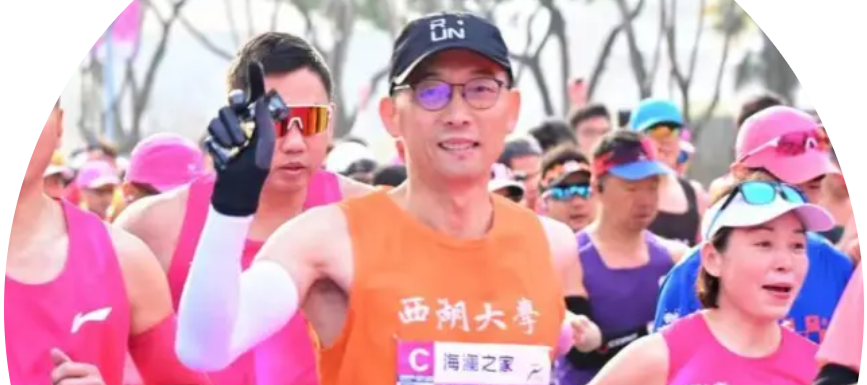
At the centre of this year’s race was Shi Yigong, president of Westlake University. His participation, prompted by an invitation from a Wuxi-born student, added an unexpected yet compelling dimension—linking youth aspiration, academic excellence, and civic engagement.
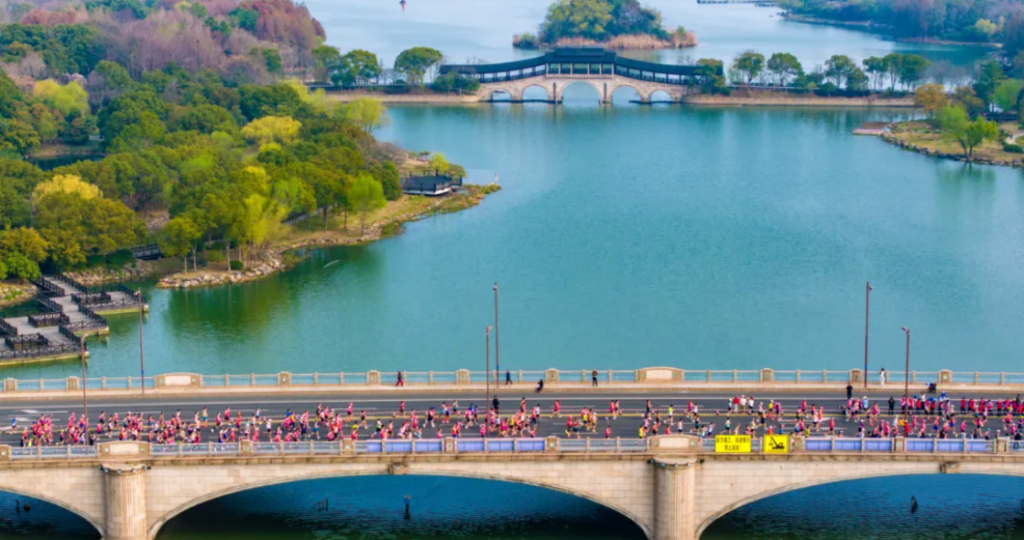
A “race through a scenic painting”
Widely regarded as one of China’s most scenic marathon routes, the Wuxi course is designed to maximize both visual appeal and runner experience. Starting from Taihu Avenue and finishing at the Wuxi Taihu International Expo Center, participants pass a curated sequence of landmarks: the cherry blossom-lined paths of Yuantouzhu, the shimmering waters of Lihu Lake, the academic setting of Jiangnan University, and the expansive wetlands of Gonghu Bay.
During peak bloom, falling cherry blossoms create the signature “cherry petal rain,” reinforcing the event’s reputation as a “race through a scenic painting.” This integration of sport and environment is deliberate, distinguishing Wuxi by embedding natural aesthetics directly into the race experience.
For participants, the course offers more than competition—it is an immersive journey in which each segment reveals a new landscape, transforming endurance into cultural and sensory exploration. Flat terrain, lakeside air, and thoughtful route design further contribute to a notably comfortable running experience.
The signal value of scientific presence
The participation of Shi Yigong (photo above, source: Wuxi Daily) elevated the marathon beyond sport. As one of the world’s most prominent scientists in structural biology, his presence carries symbolic weight across education, innovation, and leadership.
His involvement began with a personal invitation from a Wuxi student studying at Westlake University, who described the event as the “most beautiful marathon course.” After completing the race, Shi praised it to the media as “beautiful and enjoyable”—a moment of authenticity that resonated widely.
For Wuxi, a city with more than three millennia of cultural heritage and a longstanding tradition of scholarship, this alignment with scientific excellence and youth ambition is particularly significant. In an increasingly competitive global race for talent, such moments reinforce the city’s positioning as both culturally rich and intellectually vibrant.
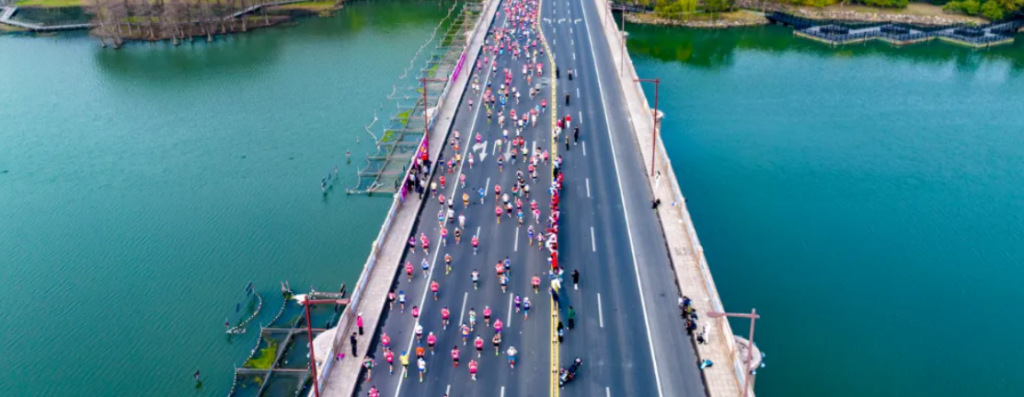
Scale, selectivity, and demand
The marathon’s scale underscores its growing influence. With 495,635 applicants competing for 35,000 places, the acceptance rate fell below 10%, placing it among the most competitive races globally.
This level of demand reflects broader trends: rising interest in endurance sports, increased willingness to travel for experience-driven events, and growing recognition of Wuxi as a destination city. In this context, the marathon functions not only as a sporting event but also as a signal of urban attractiveness.
Expanding connectivity: Wuxi–Kuala Lumpur
The race coincided with another milestone in Wuxi’s outward-facing strategy. Two days earlier, the city launched its first direct air route to Kuala Lumpur, strengthening links between eastern China and Southeast Asia.
Beyond reducing travel time, the route provides a platform for deeper economic and cultural exchange. Alongside existing direct flights to Singapore and Thailand, it contributes to the gradual development of a regional corridor into ASEAN markets.
Over time, increased passenger traffic is expected to support cargo flows, reinforcing route sustainability. For a city driven by advanced manufacturing and innovation, such connectivity is critical to enhancing supply chain efficiency and expanding international reach.
This growing connectivity is reflected in the city’s expanding aviation ecosystem. Sunan Shuofang International Airport has emerged as a key regional hub, with passenger throughput exceeding 10 million for the first time and the introduction of a 240-hour visa-free transit policy. Wuxi has also established 51 international sister-city partnerships, further strengthening its global engagement.
Running toward a broader identity
While rooted in sport, the marathon’s broader significance lies in how it supports Wuxi’s evolving identity. The city is increasingly positioning itself as:
- A highly livable destination, defined by high-quality natural and urban environments
- An innovation hub, anchored by institutions such as Jiangnan University, Southeast University Wuxi Campus, CSSRC 702 Institute, and NSCC-Wuxi
- A globally integrated economy with expanding international linkages
This convergence of lifestyle, talent, and economic opportunity reflects a more holistic model of competitiveness. As runners traced the lakeside course beneath falling cherry blossoms, the Wuxi Marathon once again demonstrated its dual role as both a premier sporting event and a platform for talent attraction. The presence of Shi Yigong added intellectual resonance, while the landscape delivered visual and emotional impact.
In this context, the marathon is more than a race. It is a symbol of Wuxi’s evolving identity – one that blends culture, innovation, and global ambition, step by step.