From high-volume pickup production to WorldSSP victories, Wuxi’s integrated manufacturing ecosystem is enabling China’s rapid advance toward performance-led engineering and globally competitive automotive platforms.
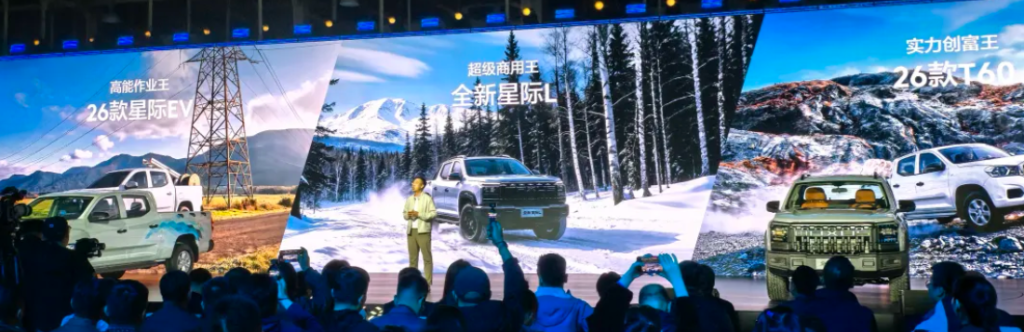
On March 31, SAIC Maxus rolled its 400,000th pickup truck off the production line at its Wuxi facility, marking a major milestone in its large-scale manufacturing capabilities. At the same time, the company launched three new models: the Interstellar L, the 2026 T60, and the Interstellar EV, spanning both diesel and electric platforms.
Just days earlier, on March 28–29, Chinese motorcycle brand ZXMOTO made history at the Superbike World Championship. At the Portuguese round in Portimão, French rider Valentin Debise secured back‑to‑back victories in the World Supersport (WorldSSP) class aboard the Wuxi‑assembled 820RR‑RS, outperforming established brands such as Ducati, Yamaha, and Kawasaki by more than 3.6 seconds in one race. The achievement marks the first time a Chinese manufacturer has won in this category, ending decades of dominance by European and Japanese brands.
Taken together, these developments underscore how Wuxi has evolved from a traditional manufacturing base into a strategic node linking large-scale industrial production with high-performance engineering validation.
Two milestones, one industrial backbone
SAIC Maxus’ pickup milestone reflects the scale and maturity of Wuxi’s automotive manufacturing base. The simultaneous rollout of three pickup models highlights a platform-based approach capable of addressing diverse global market needs across powertrains and use cases.
SAIC Maxus’s Wuxi plant, located in Huishan District, serves as the company’s primary commercial vehicle production base, with an annual capacity of about 200,000 units. The facility manufactures a broad portfolio, including commercial vehicles such as the V80 vans, G10 MPVs, and V90 transport vans, as well as the EV90 electric van. It also produces SUVs like the D90 and Territory (Lingdi), which reached a cumulative milestone of one million units in 2024, alongside pickup models including the T60 and its new energy variants.
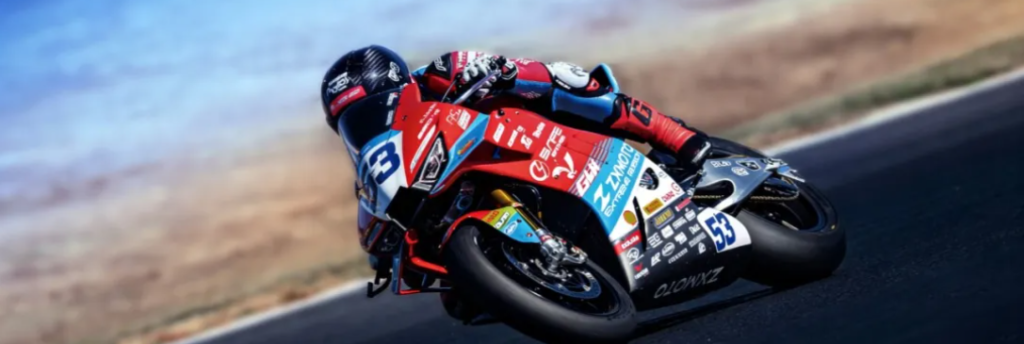
Meanwhile, ZXMOTO’s race-winning 820RR-RS, assembled in Wuxi, demonstrates the city’s growing capability in high-performance engineering. Its success at the WorldSSP level signals a broader shift in China’s ability to compete at the highest levels of global motorsport.
While one milestone unfolded on the factory floor and the other on the racetrack, both are rooted in the same regional advantage: Wuxi’s mature, full-chain automotive supply network.
Performance engineering meets platform diversification
On the commercial side, SAIC Maxus exemplifies modular, application-driven vehicle development. Its diversified pickup lineup reflects a transition toward flexible global platforms that can accommodate both internal combustion and electric drivetrains.
The company has also expanded into hydrogen mobility. At its Wuxi base, SAIC Maxus has established dedicated production lines for fuel cell vehicles. In 2020, it produced China’s first fuel cell MPVs, the MAXUS EUNIQ 7, equipped with systems from SHPT. These systems utilize high-efficiency MEA production lines supplied by Wuxi LEAD Intelligent Equipment, highlighting Wuxi’s role across both battery-electric and hydrogen value chains.
In parallel, ZXMOTO’s 820RR-RS showcases how the same ecosystem supports high-performance innovation:
- 819cc inline three-cylinder engine
- Output approaching 150 horsepower in race configuration
- Lightweight chassis optimized for power-to-weight ratio
- Approximately 10% production cost savings through localized manufacturing
In motorsport, where marginal gains determine outcomes, such efficiencies can be reinvested into R&D, accelerating iteration cycles and enabling competitive parity with established global brands.
Ecosystem-driven cost advantage and global reach
At the core of both developments is Wuxi’s dense industrial cluster, which delivers measurable advantages:
- Cost efficiency: Localized assembly reduces production costs by around 10%
- Supplier density: Hundreds of suppliers support the full automotive value chain
- Scale integration: More than 50 suppliers are directly linked to SAIC Maxus’ operations
For SAIC Maxus, this ecosystem underpins its global expansion:
- Presence in over 100 countries and regions
- Leading export position among Chinese high-end pickup brands
- Strong footholds in markets such as Australia, New Zealand, Chile, and across Europe
For ZXMOTO, the same ecosystem enables a cost-performance strategy. Its 820RR model combines competitive specifications with significantly lower pricing than Western counterparts, contributing to strong early market demand.
From “Made in China” to “Engineered in China”
These milestones reflect a broader structural shift in China’s automotive sector, with Wuxi as a representative model:
I. Platform-based globalization: SAIC Maxus’ diversified pickup strategy enables adaptation to varying regulatory and customer demands across global markets.
II. Motorsport as a technology accelerator: ZXMOTO’s success illustrates how racing compresses innovation cycles, feeding performance validation directly into product development.
III. Cost-performance disruption at scale: Both companies demonstrate a shared formula: competitive engineering combined with structurally lower production costs.
IV. Integrated clusters as competitive moats: Wuxi’s ecosystem functions as a coordinated innovation platform, reducing time-to-market while enabling cost-efficient iteration.
Wuxi’s ecosystem advantage
Together, these dynamics point to a deeper structural strength underpinning both companies’ achievements. This convergence highlights Wuxi’s role as more than a production base—it is an integrated industrial ecosystem enabling both innovation and scale.
Unlike fragmented manufacturing models, Wuxi offers:
- Localized, end-to-end component sourcing
- Advanced manufacturing capabilities, including smart factory systems
- Strong OEM–supplier integration for synchronized production
This model increasingly rivals—and in some aspects surpasses—traditional automotive clusters in Germany and Japan, particularly in scalability and cost efficiency.
From credibility to market share
The immediate impact of ZXMOTO’s WorldSSP victories is reputational, signalling that Chinese manufacturers can compete and win at the highest levels of performance engineering.
The next phase is commercialization. Converting technical credibility into sustained global sales will depend on brand building, distribution networks, and consistent product performance across markets.
For SAIC Maxus, the priority is to leverage its expanded pickup portfolio to deepen its international presence while navigating electrification and regulatory shifts.
In both cases, Wuxi provides the foundation: a manufacturing ecosystem capable of supporting rapid innovation, high-quality production, and global distribution.
As the automotive industry undergoes simultaneous transitions toward electrification, digitalization, and new mobility use cases, Wuxi’s model demonstrates how tightly integrated, high-efficiency industrial clusters can underpin both mass manufacturing and technological advancement.