Alpha Special Report II: Liquid Hydrogen Scale-Up
With proprietary turbomachinery, sub-13 kWh/kg liquefaction efficiency, and a dual-track grey–green hydrogen strategy, Wuxi Koloh is positioning itself at the intersection of localization, cost reduction, and emerging low-altitude hydrogen applications.
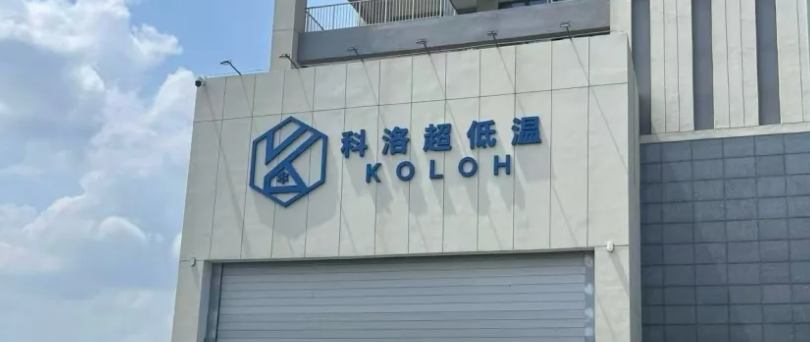
A rapid entrant in a strategic race
As China accelerates efforts to localize critical hydrogen infrastructure, a one-year-old startup in Wuxi is moving at an unusual pace. Founded in December 2024, Wuxi Koloh has quickly established a presence across the liquid hydrogen (LH2) equipment value chain from large-scale liquefaction plants to distributed systems and mobile storage.
This trajectory reflects a broader shift in China’s hydrogen strategy: from policy-led pilot projects to industrial-scale deployment, where cost, reliability, and domestic supply chains are becoming decisive.
At the centre of this transition lies a longstanding bottleneck: efficient, scalable liquefaction below 20 Kelvin. Koloh claims it has already crossed several key technical thresholds.
Early positioning in a compressed timeline
Koloh’s progress is defined less by a single breakthrough than by the speed at which it has assembled capabilities typically associated with more mature players.
Its core technical team draws from leading Chinese institutions, including the Technical Institute of Physics and Chemistry (TIPC-CAS), Xi’an Jiaotong University, Huazhong University of Science and Technology, and the University of Science and Technology Beijing. The team brings deep expertise in sub-20K system design, particularly in turbomachinery, cryogenic valves, and system integration.
Within a short timeframe, the company has:
- Completed development and engineering validation of 5–10 tonnes/day industrial liquefaction systems
- Initiated R&D toward 30 tonnes/day capacity, targeting H2 2026
- Developed distributed liquefaction units (50–1,000 litres/day) for decentralized applications
- Advanced liquid hydrogen storage and supply modules for mobility use cases
- Achieved early deployment of self-developed cryogenic valves and pumps
This breadth reflects a deliberate strategy: not just to compete in a single segment, but to control multiple nodes in the liquid hydrogen value chain.
Efficiency, purity, and system integration
Koloh’s technical proposition rests on performance benchmarks that, if sustained at scale, place it near the leading edge of global liquefaction technology.
I. Large-scale liquefaction systems
Key specifications include:
- Energy consumption below 13 kWh/kg
- Para-hydrogen concentration ≥95%
- Proprietary turboexpander design
Global benchmarks typically range from 10–15 kWh/kg, with leading players operating around 11–13 kWh/kg and next-generation systems targeting sub-10 kWh/kg. Koloh’s roadmap aligns with this trajectory.
Para-hydrogen conversion is equally critical: incomplete conversion leads to boil-off losses, making ≥95% a widely accepted industry benchmark.
II. Distributed liquefaction systems
Koloh’s skid-mounted systems target decentralized scenarios, offering:
- 50–1,000 litres/day capacity
- Hydrogen purity ≥99.9999%
- Para-hydrogen ≥95%
- ~20% lower energy consumption than conventional systems
Optimized ortho–para conversion and energy management reduce evaporation losses, supporting mobile and remote applications.
III. Storage and supply modules
The company’s storage systems feature:
- Multi-layer composite insulation
- High-strength lightweight alloys
- Ultra-low daily boil-off rates
These are critical for applications where weight, volume, and thermal stability directly affect performance.
IV. Localization of critical components
A major strategic advance lies in core components:
- Self-developed cryogenic valves and pumps
- Performance exceeding imported equivalents (static parameters)
- Costs reduced to roughly one-third of imports
This directly addresses China’s reliance on expensive imported components with long lead times.
Cost, customers, and scalability
The economics of liquid hydrogen depend on energy efficiency, capital cost, hydrogen feedstock, and demand. Koloh’s model addresses all four.
I. Cost structure and hydrogen sourcing
The company adopts a dual-track approach:
- Grey hydrogen as a near-term commercial base
- Green hydrogen as a long-term strategic focus
In China, grey hydrogen costs approximately CNY 10/kg, compared with ~CNY 15/kg for green hydrogen in optimal regions or post-subsidy. This approach balances near-term cash flow with long-term positioning.
II. Project pipeline and scale
Koloh is:
- Conducting feasibility studies for multiple LH2 plants nationwide
- Advancing ~35 tonnes/day-class projects in the grey hydrogen segment
At this scale, liquefaction becomes relevant for transport, chemicals, and potential export markets.
III. Customer ecosystem
Its partnerships span industrial hydrogen producers, major state-owned power groups, leading research institutions, UAV manufacturers, and laboratory test platforms. This diversified base positions Koloh across both upstream and downstream segments.
Application spotlight: LH2 drones
A defining feature of Koloh’s strategy is its focus on liquid hydrogen-powered drones, where LH2 offers clear advantages over compressed gaseous hydrogen (CGH2):
- 2–3× longer endurance at equivalent weight and volume
- >300 km flight range
- Faster refuelling and broader operating temperature range
CGH2 drones are typically limited to around three hours of flight time, making these advantages particularly significant for:
- Long-distance infrastructure inspection
- Offshore wind monitoring
- Border surveillance
- Plateau mapping and forestry applications
Policy support further reinforces this opportunity. China’s “low-altitude economy” has been included in government work reports for three consecutive years and, in 2026, was formally elevated to a “strategic emerging pillar industry.” This is expected to drive rapid growth in drones, urban air mobility, and emergency response systems.
Koloh’s strategy, using small-scale liquefaction and storage as an entry point, positions LH2 as a key enabling technology within this ecosystem.
Value chain: integration versus specialization
Koloh is pursuing a partially integrated model spanning:
- Liquefaction systems
- Core components
- Storage and supply modules
- Application-specific solutions
This contrasts with the more specialized approach of many Western players. Integration enables faster iteration, lower system-level costs, and reduced supplier dependency, but introduces challenges in scaling and quality control.
Localization, cost curves, and global competition
Koloh’s strategy highlights three structural shifts in the hydrogen equipment market.
First, component localization—at roughly one-third the cost of imports—can significantly reduce capital expenditure and improve supply chain resilience.
Second, declining liquefaction costs are critical. Reducing energy consumption from ~13 kWh/kg to below 10 kWh/kg could lower operating costs by 20–30%, depending on electricity pricing.
Third, new demand segments are emerging. While hydrogen demand has traditionally centred on refining and chemicals, applications such as drones and mobility prioritize energy density and performance, favouring liquid hydrogen in high-value niches.
From niche capability to system-level influence
Koloh’s early positioning suggests that the next phase of China’s hydrogen industry will be defined not only by scale, but also by efficiency, localization, and application-driven innovation.
If it delivers on its roadmap, particularly sub-10 kWh/kg liquefaction and scaled deployment, it could help:
- Lower the cost curve of liquid hydrogen
- Enable new mobility and distributed energy applications
- Strengthen domestic capabilities in cryogenic technologies
More broadly, its trajectory illustrates how rapidly capability gaps can close when technical expertise, policy momentum, and market demand align. As a member of the Wuxi Hydrogen Industry Alliance, Koloh is embedded in a regional ecosystem that accelerates pilot deployment and real-world validation, reinforcing its role in shaping cluster-based hydrogen value chains.
In the global race to commercialize hydrogen, the focus is shifting from scientific breakthroughs to engineering execution and cost competitiveness. Companies such as Koloh are betting that speed, integration, and localization will define the winners.