Four decades of joint certification, testing, and standards development position CSA and CCIC to shape global market access, electrification certification frameworks, and next-generation industrial compliance ecosystems across Asia and beyond.
A milestone in global conformity assessment
On April 14, CSA Group and China Certification & Inspection Group (CCIC) marked the 40th anniversary of their partnership in Beijing, one of the longest-standing bilateral collaborations in the global testing, inspection, and certification (TIC) sector.
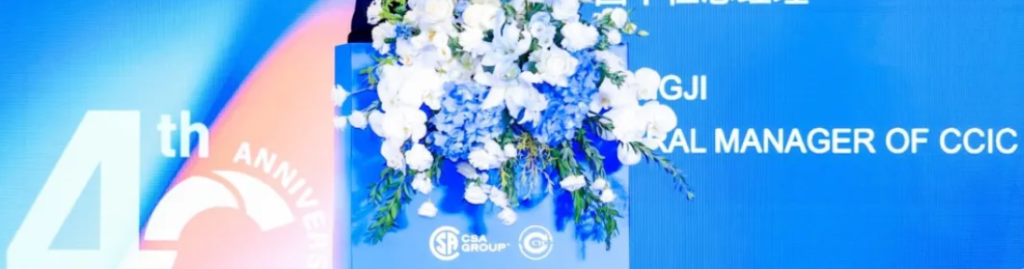
The CEO, CFO, and SVPs of CSA Group and the General Manager of CCIC, alongside senior officials from the Canadian Embassy in Beijing, attended the event, underscoring the partnership’s enduring diplomatic and commercial relevance.
The anniversary comes at a pivotal moment. Global supply chains are being reshaped by decarbonization targets, regulatory divergence, and increasingly complex compliance requirements. In this environment, TIC providers are no longer peripheral; they are central to market access, risk management, and industrial competitiveness.
Four decades of evolving cooperation
Established in 1986, the CSA–CCIC partnership began with factory inspections supporting Chinese manufacturers exporting to North America. It has since evolved into a comprehensive conformity assessment platform spanning:
- Product testing and certification
- Standards development and harmonization
- Cross-border market access services
- Industrial and energy-sector compliance
- ESG and sustainability verification
This trajectory closely mirrors China’s industrial ascent from low-end manufacturing to global leadership in renewable energy, electric mobility, and advanced electronics. Throughout this transformation, the joint TIC framework has played a quiet but critical role in enabling export growth, quality assurance, and regulatory alignment.
Localizing advanced testing capacity
In recent years, the partnership has accelerated investment in localized testing infrastructure to meet rising technical complexity and tightening regulatory standards. Key facilities include:
Kunshan New Energy Testing & Certification Center (2024)
Located in the Yangtze River Delta, within 20–30 minutes by high-speed rail from Shanghai and Wuxi, the facility focuses on:
- Battery systems, including lithium-ion and next-generation chemistries
- Power electronics and grid integration systems
- Industrial safety and performance validation
Electromagnetic Compatibility (EMC) Laboratory, Kunshan (2025)
A critical addition for electrification and digitalization, supporting:
- EMC testing to IEC/CISPR standards
- RF interference and shielding validation
- Certification of connected and IoT-enabled devices
Guangzhou Integrated Testing Center (2026)
Located in Guangdong’s Greater Bay Area, the facility integrates:
- Electrical and electronic product testing
- Gas appliances and combustion systems
- Water, plumbing, and environmental systems
- Multi-standard certification for global markets
Together, these facilities anchor a localized compliance ecosystem aligned with China’s industrial geography:
- Yangtze River Delta (Kunshan): EV supply chains and advanced manufacturing
- EMC capabilities: foundational for electrification and grids
- Greater Bay Area (Guangzhou): export-oriented electronics and industrial products
Localization delivers tangible benefits, including 30–50% reductions in certification lead times, lower logistics costs, and reduced regulatory uncertainty for exporters.
Canada–China collaboration: from battery chemistry to global scale
The evolution of the CSA–CCIC partnership sits within a broader context of Canada–China collaboration in electrification technologies, such as battery innovation.
One example is lithium iron phosphate (LFP) chemistry. In the early 2000s, a consortium led by Hydro-Québec and the Université de Montréal made critical advances in LFP cathode chemistry, a safer and more stable alternative to traditional lithium-ion variants. Rather than keeping the technology under lock and key, the consortium made a strategic decision: in 2011, it began freely licensing its patents to Chinese battery makers such as CATL and BYD.
The move proved prescient. Freed from licensing costs, Chinese firms rapidly scaled up production and drove down costs, establishing LFP as a competitive rival to nickel-rich chemistries like NCA and NMC. Tesla, long a proponent of nickel-based batteries, adopted LFP cells for its Standard Range Model 3 and Model Y in 2021.
The Canadian consortium retained global licensing rights outside China, collecting royalties on LFP products sold internationally until the patents expired in 2022. Afterward, the technology entered the public domain for global, royalty-free adoption.
Today, LFP is the dominant battery chemistry: in 2025, it accounted for over 50% of EV batteries sold worldwide and ~90% of newly installed stationary storage capacity.
This trajectory highlights a broader pattern: Canadian innovation, combined with Chinese manufacturing scale, has reshaped the economics of global electrification. Certification frameworks, such as those developed by CSA and implemented with CCIC, serve as the bridge enabling these technologies to move safely across borders and markets.
Certification in renewable energy systems
Certification is becoming increasingly central in high-risk systems such as battery energy storage (BESS) and hydrogen infrastructure, where failures can have systemic consequences.
Rather than acting as a final checkpoint, certification now intersects directly with:
- Thermodynamics and heat propagation
- Materials science and degradation behavior
- System integration and control architecture
This evolution is exemplified by large-scale fire testing of grid storage systems. In June 2025, Envision conducted a landmark test of a 20 MWh LFP-based energy storage system under full on-site witnessing by CSA Group, in accordance with CSA C800 fire safety protocols.
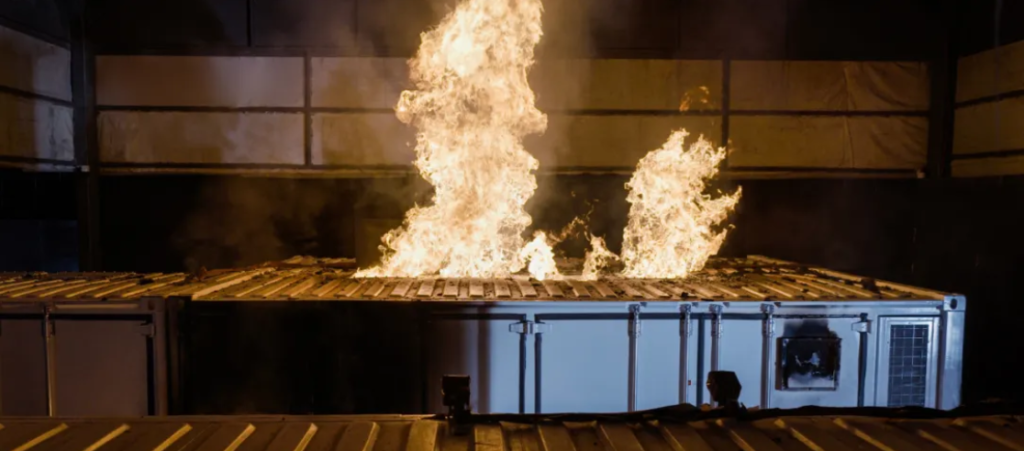
The system comprised four fully charged 5 MWh containerized units, spaced just 5 cm apart, far tighter than the industry norm of several meters, and operated without active fire suppression or external intervention. The results were striking:
- Peak temperatures exceeded 1,200°C in the ignition unit
- Adjacent units remained near ambient temperature
- No fire propagation occurred
- Structural integrity was maintained over nearly 50 hours of sustained combustion
The test demonstrated a multi-layer safety architecture spanning stable battery chemistry, pack-level controls, and system-level monitoring. To date, about 10 Chinese BESS manufacturers have passed similar large-scale fire certification tests, including CATL, BYD, and Canadian Solar.
TIC: Enabling trade at scale
The TIC sector underpins an estimated $30–40 trillion in global trade, acting as a gatekeeper for regulatory compliance.
Certification typically accounts for 2–5% of product development costs, yet delays can result in lost market opportunities, regulatory penalties, and supply chain disruptions.
Localized testing infrastructure mitigates these risks by accelerating certification timelines and enabling faster product iteration, an increasingly critical advantage in fast-moving sectors such as EVs, batteries, and hydrogen systems.
Standards as industrial leverage
As certification becomes more deeply embedded in technology development and trade flows, standards are evolving from technical requirements into strategic instruments. They shape market access, influence industrial competitiveness, and increasingly reflect geopolitical priorities.
I. Standards as soft power
Certification frameworks are emerging as instruments of geopolitical and industrial influence. The CSA–CCIC model combines Western standards expertise with China’s scale and regulatory integration, enabling faster harmonization and reduced trade friction.
II. Enabling industrial upgrading
China’s transition toward high-value manufacturing, including hydrogen systems, EVs, and smart grids, depends on robust certification ecosystems. The partnership supports export competitiveness, ESG compliance, and alignment with international technical norms.
III. Regional alignment
Investments in Kunshan and Guangzhou align with national strategies in the Yangtze River Delta and the Greater Bay Area, which anchor China’s high-tech exports and clean energy manufacturing base.
From compliance to strategic enabler
The 40-year CSA–CCIC partnership reflects a broader transformation of the TIC industry—from a back-office compliance function to a strategic pillar of global trade and the energy transition.
As industrial systems grow more complex and interconnected, certification bodies are playing an expanded role in risk management, technology validation, and market formation. This is more evident in hydrogen and energy storage, where safety, interoperability, and sustainability are prerequisites for scale.
With sustained investment in localized capabilities and alignment with global standards, the CSA–CCIC alliance is positioned not only to facilitate trade but also to help define the rules governing the next generation of electrification, energy, and industrial systems.