Surging renewable generation, high utilization rates, and accelerating electrolysis deployment position hydrogen as a system-level decarbonization lever, with industrial integration and policy alignment now critical to scale.
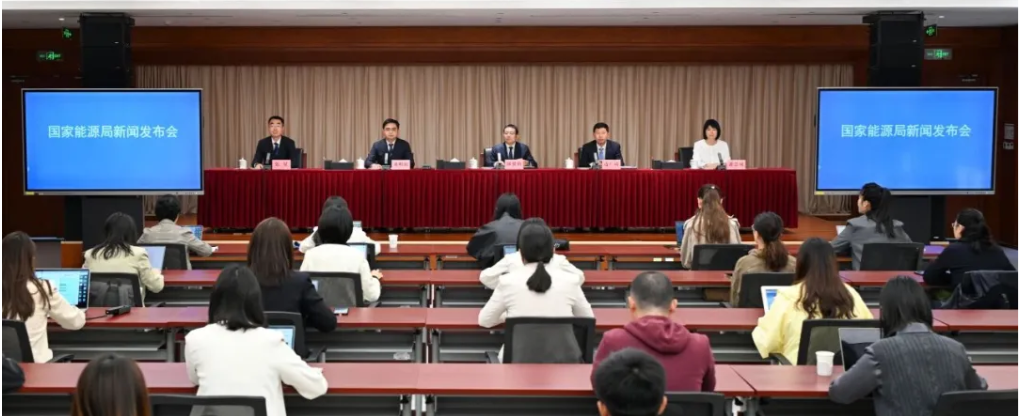
On April 27, China’s National Energy Administration (NEA) held its Q1 2026 briefing, signalling a clear shift in the hydrogen sector from pilot experimentation to early-stage industrialization. Record renewable deployment, strengthening market mechanisms, particularly green certificates, and a rapidly expanding pipeline of electrolysis projects are converging to support this transition.
Although green hydrogen still represents a small share of total supply, accelerating capacity growth, especially in northern regions, combined with evolving commercial models, suggests hydrogen is becoming structurally embedded in China’s energy transition.
Key signals from the NEA briefing
Taken together, the Q1 data points to a system undergoing rapid structural change. Renewable energy has reached meaningful penetration levels, while hydrogen is beginning to scale alongside it as both a flexibility tool and an industrial decarbonization vector.
I. Renewables reaching system-level penetration
China’s power system continues to rebalance toward renewables:
- Wind and solar generation reached 580.9 TWh in Q1 2026, accounting for 23.3% of total electricity consumption
- Total renewable generation rose to 882.9 TWh, or 37.1% of total generation
- Installed renewable capacity reached 2.395 TW, representing 60.4% of total capacity
Wind and solar alone account for 1.898 TW (47.9%), underscoring their growing dominance in the generation mix.
II. Continued acceleration in solar and wind deployment
- Solar PV additions: 41.19 GW in Q1 (+31.2% YoY)
- Wind additions: 15.77 GW (+22.4% YoY)
Utilization remains strong despite rapid expansion:
- Solar: 90.6%
- Wind: 91.4%
These levels indicate continued improvements in grid integration and demand-side absorption.
III. Hydrogen capacity doubling signals early scale formation
- Green hydrogen capacity (operational + under construction): >1 Mt/year
- Operational capacity: >250,000 t/year (more than doubled since end-2024)
- Pipeline (under construction): >900,000 t/year
The sector is moving from fragmented pilots toward coordinated scale-up.
Technology and project characteristics
As deployment accelerates, the technical profile of China’s hydrogen sector is becoming clearer, with a focus on cost optimization, system integration, and industrial relevance.
I. Electrolysis as the dominant pathway
Electrolysis powered by renewable electricity remains the primary production route:
- Predominantly alkaline electrolyzers due to cost advantages
- Gradual adoption of PEM systems for flexibility
- Increasing integration with variable renewable energy
While consistent with global trends, China’s scale in manufacturing and deployment provides a distinct pathway to cost reduction.
II. Project scaling: from pilot to pre-commercial
Project sizes are increasing materially:
- Operational projects:
- Average ~4,900 t/year
- ~50% ≤1,000 t/year
- Under construction:
- Average ~13,000 t/year
- 38% ≥10,000 t/year
- Multiple ≥50,000 t/year projects underway
Eight projects above 10,000 t/year are already operational.
Implication: the sector is entering a phase of scale-driven cost optimization, a prerequisite for long-term competitiveness.
III. Regional concentration and clustering
Hydrogen deployment is concentrated in resource-rich northern regions:
- Northeast: 45.7% of operational capacity
- North China: 30%
- Northwest: 21.8%
Leading provinces include:
- Jilin: >90,000 t/year
- Inner Mongolia: >80,000 t/year
Key drivers include strong renewable resources, proximity to industrial demand, and renewable curtailment pressures, reflecting a deliberate resource–demand co-location strategy.
Commercial models and value chain
As deployment scales, commercial models are evolving to capture value across the hydrogen value chain, with two dominant pathways emerging.
I. Renewable power–hydrogen integration
This model integrates renewable generation, electrolysis, and industrial consumption, particularly in refining, petrochemicals, and coal chemical sectors.
By co-locating supply and demand, projects improve renewable utilization, reduce emissions in hard-to-abate industries, and provide flexible load to the power system. This approach is especially relevant in regions with high renewable curtailment.
II. Hydrogen derivatives: ammonia, methanol, SAF
In parallel, hydrogen is increasingly converted into transportable fuels:
- Green ammonia: ~700,000 t/year
- Green methanol: ~380,000 t/year
- Sustainable aviation fuel: ~1.7 Mt/year
China has already built green fuel production capacity equivalent to ~8 million tonnes/year of oil equivalent, with hydrogen-derived fuels forming a growing share. This marks a shift from traditional biofuels (ethanol, biodiesel) toward hydrogen-based fuels.
These pathways expand hydrogen’s role beyond industrial feedstock to a broader energy carrier, enabling long-distance transport, new end-use markets, and potential export opportunities.
Cost and market dynamics
While deployment is accelerating, commercial viability remains closely tied to cost evolution and market mechanisms.
I. Cost trajectory: improving but not yet competitive
Green hydrogen remains more expensive than fossil-based alternatives. However, several structural drivers are improving competitiveness:
- Declining renewable electricity costs
- Scaling of electrolyzer manufacturing
- Increasing policy pressure on carbon-intensive production
Near-term viability still depends on policy support, long-term offtake agreements, and continued cost reductions.
II. Green certificate market strengthening signals
The green certificate market is tightening:
- Q1 2026 average price: CNY 5.13 (+217% YoY)
With a clear vintage premium:
- 2024: CNY 1.51
- 2025: CNY 5.71
- 2026: CNY 7.76
These trends enhance the value of renewable electricity, improve hydrogen project economics at the margin, and signal growing corporate demand for green power. However, challenges remain around carbon accounting linkage, international recognition, and demand visibility.
III. System integration: hydrogen’s emerging role
As renewable penetration rises, system integration is becoming central to energy policy. The NEA emphasizes coordination across generation, storage, grid infrastructure, and market mechanisms.
Within this framework, hydrogen serves three key roles:
- Flexible load, absorbing surplus renewable generation
- Long-duration storage medium
- Sector coupling vector, linking power, industry, and fuels
This becomes increasingly important as China targets annual renewable additions exceeding 200 GW.
Strategic implications and outlook
China’s hydrogen strategy reflects a broader shift toward system-level optimization. Hydrogen is emerging as a complement to batteries and pumped hydro, providing long-duration and seasonal balancing in high-renewable grids.
At the same time, industrial decarbonization pathways are becoming clearer, particularly in refining, chemicals, and coal-based sectors, where early deployment focuses on retrofit and partial substitution.
China’s scale-up strategy, based on regional clustering, integrated project development, and policy-supported pilots, reduces cost and risk while accelerating deployment. In parallel, the country is building end-to-end capabilities across electrolyzer manufacturing, renewable integration, and synthetic fuels.
Looking ahead, hydrogen is expected to feature prominently in the “15th Five-Year Plan” (2026–2030). Policymakers have signalled priorities including stronger policy support, accelerated technology innovation, expanded pilot programmes, and the development of standards and certification systems. International cooperation and market development are also expected to play a larger role.
Hydrogen development will be closely linked with broader renewable expansion strategies, including large-scale offshore wind deployment. China plans to build major offshore wind bases across the Bohai, Yellow, East China, and South China Seas, targeting over 100 GW of cumulative offshore wind capacity by 2030, further reinforcing the renewable foundation for green hydrogen production.