The Norwegian electrolyser maker is doubling accessible production capacity while cutting fixed costs, highlighting how European hydrogen OEMs are adapting to slower project timelines and intensifying global competition.
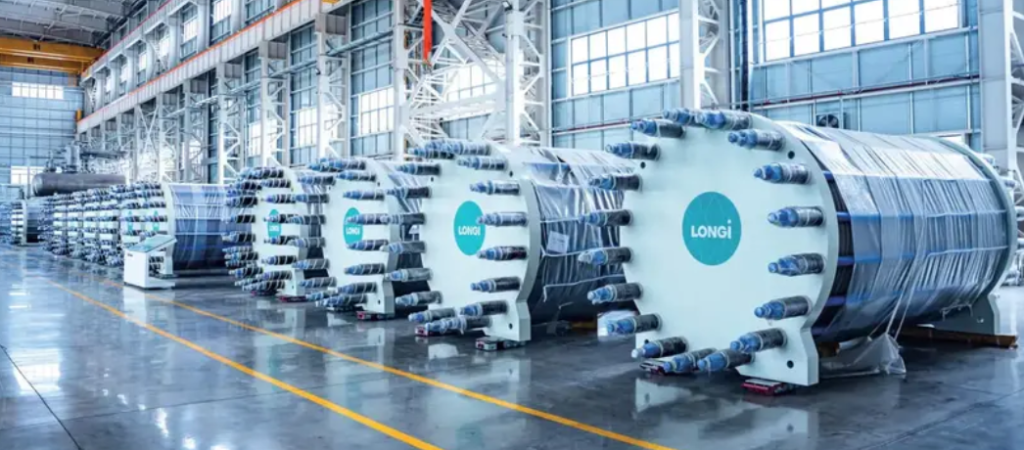
Norwegian electrolyser manufacturer HydrogenPro is restructuring its manufacturing strategy through a major OEM partnership with Chinese solar and hydrogen equipment group LONGi, marking a decisive shift toward an asset-light operating model as the global green hydrogen sector navigates slower-than-expected project deployment and tighter capital conditions.
On May 13, HydrogenPro announced during its Q1 2026 earnings release that it will mothball its wholly owned 500 MW electrolyser factory in Tianjin and transition manufacturing to LONGi Hydrogen’s highly automated production base in Wuxi.
Under the agreement, HydrogenPro gains immediate access to up to 1 GW of manufacturing capacity for electrolyser components and gas separation units, effectively doubling its available production capacity while materially reducing operating costs.
The move reflects a broader transition underway across the hydrogen industry, where electrolyser manufacturers are increasingly prioritizing capital efficiency, flexible supply chains, and scalable industrial partnerships over vertically integrated manufacturing footprints built during the sector’s earlier expansion phase.
From heavy manufacturing to flexible scaling
HydrogenPro’s restructuring comes amid growing financial pressure across the green hydrogen sector, as project developers globally face delayed FIDs, elevated financing costs, and slower infrastructure deployment.
By shutting down its Tianjin factory, the company expects to save more than NOK 20 million annually in fixed operating expenses alone. The LONGi partnership also gives HydrogenPro access to one of the industry’s most advanced manufacturing ecosystems without requiring additional large-scale capital investment.
The Wuxi facility offers a higher degree of automation and requires fewer operators per electrolyser produced, improving manufacturing efficiency and lowering unit production costs. The site also benefits from Wuxi and neighboring Yangtze River Delta manufacturing hubs, which provide mature supply chains for power electronics, pressure vessels, advanced materials, and precision machining, all critical inputs for large-scale electrolyser production.
The partnership further illustrates how Chinese manufacturing infrastructure is becoming increasingly integrated into global hydrogen supply chains, particularly in alkaline electrolysis, where Chinese manufacturers have developed significant scale and cost advantages.
LONGi’s relationship with HydrogenPro also extends beyond contract manufacturing. In 2025, LONGi invested NOK 70 million (USD 7.6 million) in the Norwegian company, becoming a strategic shareholder and deepening industrial alignment between the two groups.
Retaining IP control while leveraging Chinese scale
Despite outsourcing manufacturing, HydrogenPro emphasized that it will retain full control over its proprietary technology and core intellectual property.
The company will continue electrode development and production at its Danish R&D center, maintaining focus on high-pressure alkaline electrolyser technology, stack optimization, and advanced electrode engineering.
Under the agreement, HydrogenPro will also implement its own quality-control systems and standard operating procedures within the LONGi facility. Certain production areas will remain physically segregated and accessible only to HydrogenPro-authorized personnel, reinforcing technology protection and process-control standards.
This “Nordic R&D plus Chinese manufacturing” model is becoming increasingly common across industrial cleantech sectors, combining European engineering and IP development with China’s cost-efficient industrial scale and manufacturing automation.
HydrogenPro’s latest technology improvements suggest the company is seeking to compete not only on cost, but also on efficiency and durability.
The company reported that recent stack and electrode upgrades reduced energy consumption to 4.4 kWh/Nm³ while simultaneously lowering system weight, reducing shunt current, and improving durability.
HydrogenPro also highlighted the successful operation of all 40 electrolyser units deployed at the ACES project in Utah, one of the world’s largest pressurized alkaline hydrogen projects. The installation is backed by a 10-year service agreement, providing the company with recurring long-term revenue alongside equipment sales.
Positioning for the next growth cycle
While near-term market conditions remain challenging, HydrogenPro signaled confidence in the medium-term project pipeline.
The company said about NOK 1 billion worth of projects are expected to reach FID during 2026 and 2027, with late-stage negotiations ongoing across Europe, India, and MENA. HydrogenPro’s revised operating model may therefore position the company more competitively for the next wave of international tenders.
By combining European engineering credibility, operational references in the United States, and lower-cost Chinese manufacturing capacity, the company aims to improve pricing competitiveness without sacrificing technology differentiation.
The strategic logic also mirrors broader industry trends. As electrolyser manufacturing capacity has expanded faster than near-term project deployment, OEMs globally are reassessing expansion plans and focusing more heavily on cash preservation, factory utilization rates, and partnership-led scaling strategies.
Rather than maintaining underutilized facilities, companies are increasingly seeking flexible manufacturing arrangements that can scale rapidly when market demand accelerates.
HydrogenPro’s partnership with LONGi illustrates how the hydrogen industry is entering a more commercially disciplined phase – one defined less by aggressive capacity announcements and more by operational efficiency, technology specialization, and resilient industrial partnerships.