Agreements with CSA Group and MY Solar strengthen China’s photovoltaic quality infrastructure and support emerging service markets for installed solar assets.

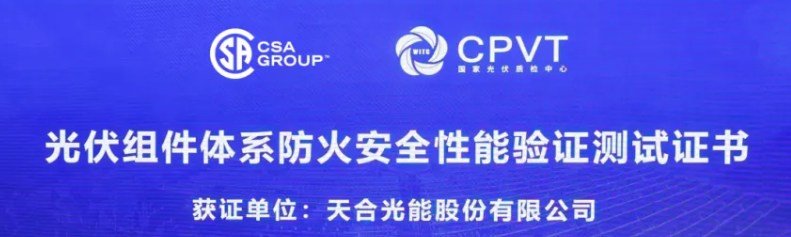
On June 3, the National Center of Supervision and Inspection on Solar Photovoltaic Products Quality (CPVT) signed a strategic cooperation agreement with CSA Group and jointly issued certificates to several companies. One day later, CPVT signed a separate agreement with MY Solar Technology, covering customized module manufacturing, solar plant retrofits, retired-module recycling, and traceability services.
Although the agreements target different parts of the value chain, both reflect increasing specialization within China’s photovoltaic industry. It also highlights the growing integration of quality assurance, end-of-life management, and advanced service capabilities across the photovoltaic ecosystem.
Strengthening certification and market access
The CPVT–CSA partnership focuses on testing, certification, and compliance services for companies serving domestic and international markets.
The two organizations will combine technical resources to provide more efficient compliance solutions as manufacturers face increasingly complex regulatory requirements worldwide. For exporters of photovoltaic modules, inverters, energy storage systems, and related equipment, certification has become a strategic requirement rather than a procedural step, affecting market access, project bankability, and customer acceptance.
Established in 2007, CPVT is China’s first national-level photovoltaic product quality testing center. Based in Xinwu District, Wuxi, it provides full-lifecycle testing, certification, standards development, and technical research across the solar value chain, from raw materials and components to utility-scale power plants. The center is accredited for about 200 product categories and more than 2,000 testing parameters.
CPVT serves as a testing, evaluation, and demonstration platform designated by several Chinese government agencies, including CNCA, MIIT, and NEA. Internationally, it is an IECEE CB Scheme CB Laboratory and an active member of IEC TC82. Its laboratory network includes partnerships with major certification bodies such as VDE, TÜV NORD, SGS, CSA Group, Bureau Veritas, CQC, and CGC, enabling a “one test, multiple certifications” model that reduces duplicate testing and accelerates market access.
CSA Group brings complementary expertise in international standards development, product testing, and certification. Headquartered in Toronto, Canada, the organization operates globally across sectors including energy, industrial equipment, and electrical products. Its involvement can help Chinese manufacturers align products with North American and other international compliance requirements, supporting faster and more efficient entry into overseas markets.
The collaboration is expected to streamline certification processes, reduce redundant testing, and accelerate product qualification for overseas markets. It may also support greater alignment between Chinese and international standards as solar supply chains become more integrated.
For developers, investors, and financiers, robust certification frameworks provide independent validation of product quality, reliability, and long-term performance – key considerations as solar projects scale globally.
Developing services for existing solar assets
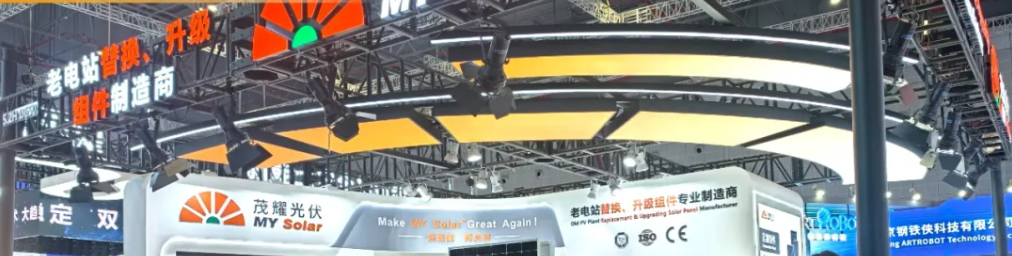
In a separate initiative, CPVT and MY Solar will collaborate on services related to existing solar infrastructure, including customized module production, photovoltaic plant retrofits, module recycling, and recycled-material traceability.
The partners aim to establish a standardized and traceable service framework for the photovoltaic aftermarket. The effort addresses growing demand for solutions that improve the performance of aging solar assets while supporting end-of-life management. Based in Huishan District, Wuxi, MY Solar has developed capabilities in flexible module manufacturing, solar plant refurbishment, and photovoltaic recycling.
In January 2025, NDRC and NEA issued the Notice on Deepening the Market-Oriented Reform of Renewable Energy On-Grid Electricity Pricing (NDRC Price [2025] No. 136), which stipulates that, in principle, all electricity generated by grid-connected renewable energy projects should be traded through the electricity market, with on-grid prices determined through market-based transactions. Effective June 1, 2025, the policy introduces differentiated arrangements for existing and new projects, increasing competitive pressure on aging assets and encouraging operators to improve performance through repowering and modernization initiatives.
Industry estimates suggest that approximately 16.3 GW of existing photovoltaic capacity nationwide has upgrade potential. If fully upgraded, these projects could generate nearly CNY 40 billion (about USD 5.5 billion) in investment, creating significant opportunities for plant refurbishment, module replacement, and lifecycle management services.
Strategic outlook
Together, the agreements highlight the continued evolution of China’s photovoltaic industry. Competitive advantage is increasingly shaped not only by manufacturing scale and cost, but also by supporting capabilities such as certification, quality assurance, standards development, asset optimization, and lifecycle services.
The CPVT–CSA partnership strengthens the quality infrastructure that underpins international market access, while the CPVT–MY Solar collaboration targets the growing market for managing and upgrading installed solar assets.
For China, the world’s largest producer and installer of photovoltaic equipment, both initiatives support the development of a more sophisticated industry ecosystem—one that extends beyond manufacturing to encompass the technical, regulatory, and service capabilities required for the next phase of solar market growth.