China’s new Five-Year Energy Plan combines CNY 20 trillion in infrastructure investment with hydrogen, AI-enabled power systems and electricity market reform to strengthen industrial competitiveness and energy security by 2030.
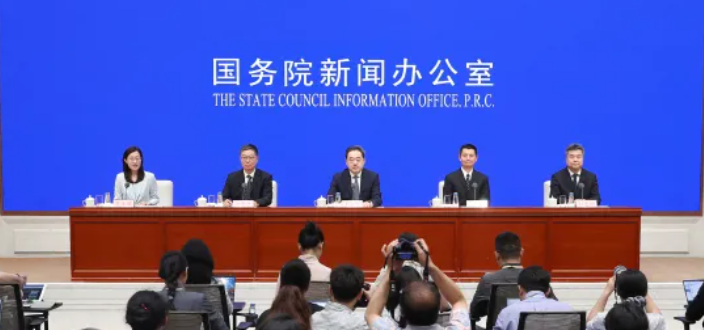
China has unveiled its 15th Five-Year Plan for Building a New Energy System, launching one of the world’s largest clean energy investment programmes with more than CNY 20 trillion (USD 2.8 trillion) expected to be invested between 2026 and 2030. Released on June 25 and detailed by the National Energy Administration (NEA) during a State Council Information Office briefing on June 26, the plan positions hydrogen, renewable power, advanced electricity grids, and digital energy infrastructure as central pillars of China’s strategy to build a clean, secure and highly efficient energy system by 2030.
Beyond expanding renewable generation, the blueprint signals a broader shift from energy transition to industrial transformation. Green hydrogen, low-carbon fuels, virtual power plants (VPPs), AI-enabled grid management and zero-carbon industrial parks are identified as new engines of economic growth, reflecting China’s ambition to integrate clean energy production with advanced manufacturing and digital infrastructure.
A record infrastructure programme
The scale of investment underscores the programme’s strategic importance. Total spending on key energy infrastructure and emerging energy industries is projected to exceed CNY 20 trillion during the 2026-2030 period, with more than CNY 2 trillion earmarked for new industries including green hydrogen, energy storage, virtual power plants, integrated energy services and AI-enabled power systems.
Electricity demand is expected to grow by 600 TWh annually throughout the planning period, equivalent to adding the yearly electricity consumption of a medium-sized economy every year. Meeting that demand while continuing to decarbonize the power sector will require not only unprecedented renewable deployment but also major investments in transmission networks, storage capacity and market reform.
By 2030, China’s installed power generation capacity is projected to reach 5.4 TW, up from 4.01 TW today. Renewable energy is expected to account for more than half of installed generation capacity, while non-fossil sources will produce around 50% of total electricity generation. The plan also anticipates China’s coal and oil consumption peaking during this period, marking an important milestone in the country’s long-term decarbonization strategy.
Hydrogen moves from pilots to industrial scale
One of the plan’s most significant developments is the elevation of hydrogen from a demonstration technology to core national energy infrastructure.
China aims to produce 2 million tonnes of renewable hydrogen annually by 2030, primarily supplying hard-to-abate industries such as steel and chemicals. Rather than prioritizing mobility applications, policymakers are focusing on industrial decarbonization, consistent with global expectations that heavy industry will become the largest early market for green hydrogen.
The strategy also promotes the development of integrated wind-solar-hydrogen-ammonia-methanol production hubs, particularly across western and northern China, where abundant renewable resources offer favourable economics for large-scale electrolysis.
These integrated projects encompass the full clean hydrogen value chain, from renewable electricity generation and water electrolysis to downstream production of green ammonia and green methanol for easier storage, transportation and export. The plan also calls for expanded hydrogen pipeline infrastructure, signalling a transition from isolated production projects towards interconnected regional hydrogen networks.
Western China emerges as a clean industrial hub
Perhaps the plan’s most strategic policy shift is its emphasis on “West Energy for West Use”, complementing the long-established West-to-East Electricity Transmission programme.
Historically, western provinces have served primarily as suppliers of electricity, coal and natural gas to eastern manufacturing centres. The new strategy instead seeks to relocate energy-intensive industries closer to abundant renewable energy resources.
The government intends to encourage advanced manufacturing, AI computing infrastructure, hydrogen production and other electricity-intensive industries to establish operations adjacent to large renewable energy bases. By aligning industrial development with low-cost clean power, China aims to reduce transmission costs, minimize renewable curtailment, improve renewable utilization, and strengthen the competitiveness of export-oriented low-carbon products.
The policy also reflects a broader evolution of western China’s economic role. Rather than exporting only electricity and primary energy, the region is expected increasingly to export higher-value manufactured products, green fuels and digital services, creating a more integrated energy-industrial economy.
Grid modernization takes centre stage
The plan recognizes that renewable expansion alone cannot guarantee a reliable electricity system without parallel investment in grid flexibility.
By the end of the planning period, China’s non-fossil installed capacity is expected to exceed 3.5 TW, representing almost 50% growth compared with the end of the 14th Five-Year Plan. Wind and solar capacity alone is projected to surpass 2.8 TW.
Managing such a large share of variable renewable generation requires substantial investment in flexible electricity infrastructure, including next-generation transmission networks, stronger interprovincial interconnections, high-power EV charging systems, vehicle-to-grid (V2G) integration, smart microgrids and direct renewable electricity supply for industrial users.
China also plans to double its charging infrastructure to around 40 million charging points by 2030, supporting more than 110 million electric vehicles.
Virtual power plants are expected to become another major source of system flexibility. Their aggregated dispatch capability is projected to exceed 50 GW, equivalent to roughly 50 large coal-fired power units, providing balancing capacity without additional carbon emissions.
Electricity market reform underpins system flexibility
Infrastructure expansion will be accompanied by continued electricity market liberalization.
China aims to establish a fully unified national electricity market by 2030 through three priorities: improving market mechanisms that facilitate renewable energy integration, expanding medium- and long-term electricity contracts alongside more active spot and ancillary service markets, and strengthening regulatory oversight to eliminate regional market barriers and administrative intervention.
These reforms are designed to improve price signals, encourage investment in flexible resources and reduce the overall cost of integrating large volumes of renewable generation into the power system.
AI and private capital become strategic enablers
Unlike earlier energy plans that focused primarily on physical infrastructure, the new strategy places AI alongside clean energy deployment as a key productivity driver.
The government will accelerate “AI + Energy” initiatives, promoting deeper integration between data centres, computing infrastructure and electricity systems. Coordinated planning of digital infrastructure and power supply is expected to become an increasingly important element of China’s industrial strategy.
The plan also expands opportunities for private investment. Authorities indicated that commercially viable nuclear, hydropower, oil and gas infrastructure projects will be opened to greater private-sector participation, while encouraging investment in virtual power plants, energy storage and EV charging infrastructure.
Global energy transition implications
China’s latest energy strategy signals that the next phase of the energy transition will extend beyond renewable deployment towards comprehensive industrial transformation.
The plan simultaneously addresses energy security as China imported 73% of its crude oil supply in 2025, while strengthening industrial competitiveness through domestic clean energy value chains.
For the global hydrogen industry, the plan provides one of the strongest policy signals that China intends to become a leader across the full hydrogen ecosystem. Combined with large-scale renewable deployment, unified electricity markets, and AI-enabled grid management, it could significantly reduce production costs while accelerating the commercial adoption of hydrogen and other clean fuels to replace oil imports.
If implementation proceeds as planned, China’s 2026–2030 investment cycle will not only reshape its domestic energy system but also influence global supply chains for electrolyzers, renewable equipment, green fuels, and digital energy technologies, displacing fossil fuel consumption and generating ripple effects across global oil and gas markets.