A cross-border AI computing platform built in Wuxi delivered uninterrupted GPU capacity for AMD’s global developer conference, illustrating how China’s emerging “Next New Three” industries are reshaping exports around technology, digital infrastructure and innovation.
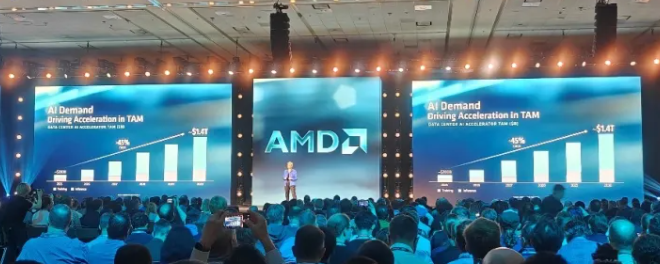
A high-performance AI computing cluster in Wuxi, eastern China, quietly became the backbone of one of AMD’s largest global developer events this summer, underscoring how Chinese digital infrastructure is increasingly supporting global innovation ecosystems rather than serving domestic demand alone.
During AMD Advancing AI 2026, held on July 22–23 at San Francisco’s Moscone Center, nearly 1,000 developers participated simultaneously in hands-on workshops covering AI agents, multimodal applications, generative AI, GPU programming and AI application development. Although the event took place in Silicon Valley, every computing task was executed approximately 10,000 kilometres away at Xinwei Intelligent Computing Center in Wuxi National Hi-Tech District (WND).
Over the two-day conference, the platform successfully launched 1,159 development environments for more than 900 active developers, maintaining 100% service availability with zero failures or service interruptions, a practical demonstration that large-scale AI infrastructure can be delivered reliably across continents.
A live test of cross-border AI infrastructure
The event marked a defining operational milestone for Xinwei Intelligent Computing Center, which opened in December 2025 as the world’s first open AI computing centre based on AMD’s Radeon and ROCm ecosystem. Its first phase deployed 5,000 AMD Radeon PRO W7900D GPUs, providing AI computing services for AI inference, intelligent agents, scientific computing and graphics rendering.
Supporting a global developer conference presented challenges well beyond conventional cloud operations. Thousands of concurrent connections from diverse network environments required imperceptible latency, dynamic allocation of 1,024 GPUs across multiple workloads, rapid access to foundation models hosted on Hugging Face and Docker Hub, and near-instant failover to standby systems in the event of hardware failure. The conference therefore became a real-world stress test of the platform’s networking, storage, orchestration and operational resilience.
Engineering reliability at scale, the platform delivered enterprise-grade performance through an integrated architecture that enabled continuous, large-scale AI computing, seamless workload allocation, and uninterrupted service throughout the conference. The deployment demonstrated that dependable AI infrastructure relies as much on systems engineering and operational resilience as on raw computing power.
Commercial significance extends beyond hardware
The deployment illustrates a broader shift in the AI infrastructure business model. Rather than simply supplying hardware, providers are increasingly exporting AI computing capacity as a globally accessible service.
Before supporting AMD Advancing AI 2026, the Xinwei platform had already powered more than ten international events—including the ASC Student Supercomputer Challenge, AI DevMaster and LabLab Hackathon—serving over 5,000 registered developers. That operational track record strengthens confidence among enterprises seeking resilient, geographically distributed AI infrastructure for AI development and inference.
The collaboration also reinforces the growing momentum behind open AI ecosystems. AMD’s investment in ROCm provides developers with an increasingly capable open alternative to proprietary GPU software stacks, while infrastructure platforms such as Xinwei lower deployment barriers through production-grade computing services.
Wuxi positions itself in China’s “Next New Three”
The project reflects Wuxi’s broader ambition to participate in China’s next phase of industrial upgrading. While the country’s original “New Three” exports, electric vehicles, lithium batteries and photovoltaic products, demonstrated China’s advance in intelligent manufacturing, a new generation of export industries is emerging. Robotics, artificial intelligence and innovative medicines, collectively known as China’s “Next New Three”, increasingly export not only products but also original technologies, intelligent systems and integrated solutions.
The shift is already evident in trade data. In the first half of 2026, China exported CNY 18.09 billion worth of cleaning and intelligent bionic robots, while industrial robot and surgical robot exports reached CNY 6.29 billion and CNY 480 million, respectively. During the fourth week of July, Chinese foundation models ranked first globally on the OpenRouter AI platform for more than ten consecutive weeks by total API calls. In innovative medicines, Chinese companies signed 81 overseas licensing agreements worth approximately US$110 billion in H1 2026, equivalent to around 80% of the total transaction value recorded in all of 2025.
Wuxi has established competitive positions across all three sectors. In AI, investments in large-scale computing infrastructure such as Xinwei support both domestic applications and international collaboration.
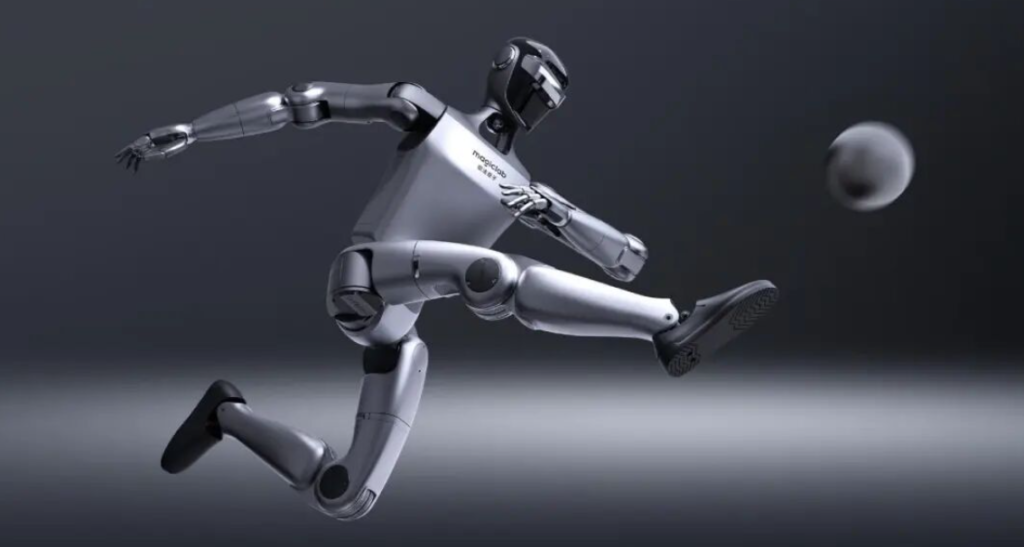
In robotics, Wuxi companies are expanding global partnerships while exporting complete technology ecosystems. In April 2026, Wuxi-based MagicLab hosted the Global Embodied Intelligence Summit (GEIS) in Silicon Valley, bringing together leading AI companies including OpenMind, PrismaX AI, CosmicBrain AI and Physis to deepen international collaboration. Since accelerating its overseas expansion in 2025, MagicLab has entered more than 50 countries and regions, with international business contributing more than 60% of revenue. The city has also launched China’s first “4S” service model for agricultural robotics, highlighting an evolution from equipment manufacturing toward integrated service ecosystems.
In innovative medicines, companies such as WuXi AppTec, with a market capitalization of more than CNY 450 billion, have helped establish the city as a global pharmaceutical innovation hub by providing integrated R&D and manufacturing services to international pharmaceutical companies.
Together, these sectors embody a broader vision of global cooperation through innovation: making AI technologies more accessible and inclusive, opening robotics supply networks to international partners, and accelerating the delivery of innovative medicines to patients worldwide.
From manufacturing to innovation leadership
The successful support of a flagship US technology conference from an AI computing centre in eastern China illustrates how the country’s competitive advantages are evolving beyond manufacturing scale toward integrated technology platforms.
China’s original “New Three” represented the upgrading of manufacturing through smarter and greener production. The “Next New Three” signal a further transition from “Made in China” to “Created in China”, where exported value increasingly resides in algorithms, computing infrastructure, software platforms, intellectual property and globally deployable solutions.
The uninterrupted operation of AMD’s developer workshops demonstrates that China is beginning to export not only advanced hardware but also digital infrastructure, operational expertise and innovation ecosystems that underpin the global AI economy. Built on years of sustained investment in industrial capabilities, open technology platforms and research infrastructure, that evolution positions cities such as Wuxi to play an increasingly influential role in the next phase of global technology development.