Backed by trillion-CNY clean energy manufacturing, near-complete supply chains, and advances in materials, electrolysis, and storage, Changzhou is positioning hydrogen as a scalable industrial and decarbonization platform.
A manufacturing powerhouse pivots to hydrogen
On the western shores of Taihu Lake, Changzhou is accelerating its evolution from a leading new energy manufacturing base into one of China’s most strategically positioned hydrogen clusters.
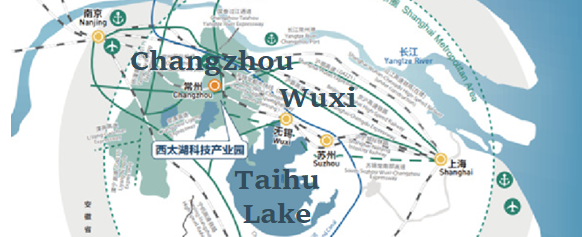
Supported by strong policy alignment and deep industrial capabilities, the city’s “Hydrogen Bay” is emerging as a fully integrated ecosystem spanning production, storage, transport, utilization, and testing—an industrial configuration that is rare globally.
This transition builds on a formidable industrial foundation. In 2025, Changzhou’s new energy sector exceeded CNY 1.0 trillion in output, placing it firmly among China’s top tier of advanced manufacturing cities. Its ecosystem, anchored in electric vehicles, power batteries, photovoltaics, and smart grids, has achieved a 97% supply chain completeness rate. Over 800,000 new energy vehicles were produced in the same year, supported by 212.9 GWh of battery capacity. Globally, one in every ten EVs now carries batteries made in Changzhou.
Hydrogen is rapidly emerging as the city’s next industrial frontier, extending its leadership from electrification into broader decarbonization technologies, anchored by advanced materials and systems integration.
Changzhou has attracted global technology companies, including Vancouver-based Westport Fuel Systems, whose GFI™ division specializes in high-pressure hydrogen valves and controls, and California-based EnerVenue, which develops nickel-hydrogen (Ni-H2) grid-scale energy storage systems. EnerVenue has already begun constructing its 250 MWh high-volume, fully automated production line in the city, with a ramp-up target of 1 GWh in annual capacity.
Since December 2025, EnerVenue’s fourth-generation Aqueous Metal Cell system has been operating in Changzhou as part of a pilot project with the Hong Kong and China Gas Company (Towngas), integrating onsite renewable generation with electric bus charging infrastructure.
From pilot to integrated platform
Changzhou’s hydrogen development is concentrated in Wujin District, anchored by the West Taihu Science and Technology Industrial Park and the “Changzhou Hydrogen Bay” platform. The cluster has been designated a provincial pilot under Jiangsu’s hydrogen development framework and forms a key component of Wujin’s “95X” modern industrial system.
By the end of 2025, the cluster had attracted more than 100 hydrogen-related enterprises, including 69 core supply chain players. Total investment has exceeded CNY 5 billion, with industrial output surpassing CNY 3.5 billion.
Its structured development model—“one base, one demonstration zone, and two centres”—translates policy ambition into an operational ecosystem:
- One base: hydrogen equipment R&D and manufacturing
- One demonstration zone: differentiated hydrogen applications across East China
- Two centres: innovation transformation and inspection/testing
Looking ahead, Changzhou is scaling its ambitions. By 2026, the Hydrogen Bay aims to host more than 60 hydrogen equipment and storage-transport enterprises, with annual output exceeding CNY 5 billion and deeper upstream–downstream integration.
Tech stack: from core materials to system deployment
Changzhou’s defining strength lies in its vertically integrated technology stack, linking materials innovation with real-world deployment across the hydrogen value chain. As the cluster matures, its competitive edge is increasingly defined by technological depth rather than scale alone.
I. Core materials breakthroughs
At the upstream level, material innovation is addressing one of the most persistent constraints in China’s hydrogen technologies—dependence on high-performance imported components.
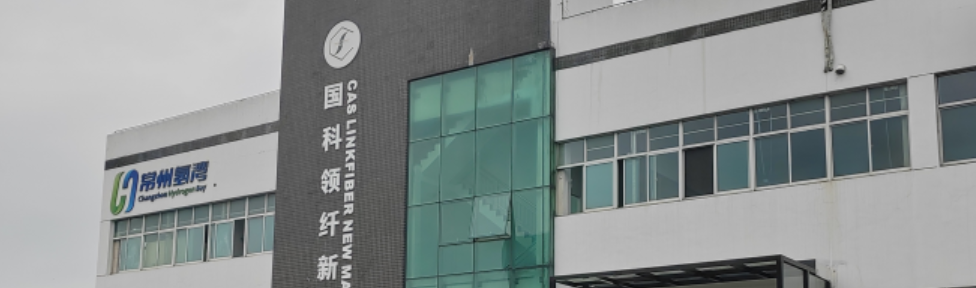
CAS Linkfiber New Materials (Changzhou) has made a critical advance in carbon paper and composite materials used in fuel cell systems. The company has achieved:
- Full-process localization from base carbon paper to gas diffusion layers
- Proprietary “point welding, strong bonding” technology
- Gradient pore structure design to mitigate water flooding and improve power density
- Delivery cycles 50% shorter than international peers
Backed by more than two decades of technical accumulation from the Institute of Coal Chemistry, Chinese Academy of Sciences (ICC–CAS), the company is among the few in China capable of large-scale, end-to-end production. Certification under IATF 16949 further positions it for automotive-grade applications.
II. Storage and transport: advanced materials enabling scale
Storage and transport costs remain critical bottlenecks for hydrogen scale-up globally. Changzhou’s approach centres on advanced materials and system integration.
Zhongfu Shenying Carbon Fiber, a leading domestic supplier, is producing T800-grade carbon fibre for Type III and Type IV high-pressure hydrogen tanks:
- Operating pressure: 350–700 bar
- Applications: vehicle storage and transport systems
- 2025 hydrogen-related output: CNY 320 million
Its products have passed certification by leading storage system providers and are undergoing validation with international fuel cell vehicle manufacturers, including Toyota and Hyundai. The company aims to scale hydrogen into its third-largest business segment by 2027.
These materials are essential to reducing system weight, enhancing safety, and enabling long-distance hydrogen logistics.
III. Hydrogen production: diversification and cost optimization
Changzhou’s hydrogen production ecosystem spans multiple pathways, balancing technological maturity with future scalability.
i. AEM electrolysis: pushing next-generation efficiency
Changzhou Aemhyin Wujin has built a full-chain technology platform spanning core materials to industrial deployment in AEM electrolysis.
In 2025, the startup achieved a breakthrough in large-format electrode manufacturing. Its AEM electrolyzer anode, measuring 600 mm × 500 mm, entered batch production. Produced under ambient temperature and pressure, the process is simpler and more cost-effective than conventional hydrothermal methods, while delivering a projected lifespan exceeding 10,000 hours. If operational stability and performance can be verified in real-world applications, it will mark a significant step toward industrial-scale AEM deployment.
ii. Seawater electrolysis: expanding resource boundaries
Another major innovation comes from HinGear Tech (Jiangsu), which has developed high-activity, high-selectivity catalysts alongside flexible electrolysis and control systems capable of stable operation under fluctuating conditions. The company has achieved:
- Direct electrolysis of seawater, saline water, and industrial wastewater
- Elimination of desalination requirements
- Stable operation exceeding 20,000 hours under variable conditions
In April 2026, a 5 MW seawater hydrogen production system was delivered to a China Huadian project site, marking the transition toward offshore hydrogen production. This follows the company’s earlier milestone: the world’s first 100 Nm³/h seawater electrolysis system, which operated continuously for over 5,000 hours, representing a “0-to-1” breakthrough in marine hydrogen technology.
HinGear Tech (Jiangsu) currently offers systems ranging from 10 kW to MW scale, with 500 MW of manufacturing capacity and plans to expand to 1 GW.
This progress is further reinforced by China’s structural cost advantages in wind energy. According to the National Energy Administration (NEA), China’s manufacturing costs for onshore and offshore wind power are 17.8% and 46.7% lower than global averages, respectively, providing a strong foundation for scaling low-cost seawater hydrogen production.
iii. By-product hydrogen: bridging early economics
Meanwhile, industrial by-product hydrogen provides an economic bridge. Xinyang Technology produces approximately 160 million cubic metres of 99.999% purity hydrogen annually, valued at over CNY 1 billion, supporting early-stage market development by lowering supply costs and improving commercial viability.
IV. Utilization: scaling applications across sectors
With upstream capabilities in place, Changzhou is accelerating downstream deployment across multiple application scenarios.
In heavy transport, CRRC Qishuyan has developed hydrogen-powered locomotives with:
- Power output: 500 kW
- Range: over 800 km
- Operational mileage: over 200,000 km
The export of a hydrogen locomotive to Chile in 2025 highlights early international competitiveness.
At the urban level, Yong’anxing is advancing hydrogen-based micromobility:
- Deployment: 2,000 hydrogen-powered bicycles
- System model: integrated production–storage–refuelling–use
- Revenue (2025): CNY 120 million
These applications demonstrate Changzhou’s efforts to position hydrogen as a complementary solution to electrification in targeted use cases.
V. Large-scale storage: salt cavern as strategic infrastructure
Beyond distributed systems, large-scale storage is emerging as a strategic priority.
Changzhou’s salt cavern hydrogen storage demonstration project, part of China’s national hydrogen program, is the only such pilot in Jiangsu.
Key features include:
- Storage scale: million-cubic-metre level
- Function: seasonal storage of renewable hydrogen
- Role: balancing renewable energy intermittency
The project aims to establish a full technical system with independent intellectual property, addressing safety, efficiency, and cost challenges. Once operational, it is expected to become China’s first large-scale salt cavern hydrogen storage base, supporting the broader Yangtze River Delta hydrogen economy.
Testing and standards: building system credibility
Alongside technology and infrastructure, Changzhou is investing in testing and certification, an often overlooked but essential component of industrial scaling.
- National Hydrogen Equipment Quality Inspection Centre
- Investment: CNY 300 million
- Focus: storage systems, valves, safety, and reliability
- Hydrogen Production Equipment Testing Centre
- More than 100 testing protocols
- Full-system performance validation
These platforms help address a key bottleneck: the lack of standardized testing and certification frameworks in hydrogen technologies.
Integration drives competitiveness
As the industry moves from demonstration to commercialization, integration is becoming the defining factor of competitiveness. Changzhou’s hydrogen strategy is underpinned by a clear commercial logic: scale through integration.
- Total investment: >CNY 5 billion
- Testing and innovation: >CNY 600 million
- Infrastructure: >CNY 800 million
- Industrial output: >CNY 3.5 billion
Rather than pursuing isolated projects, the city has built a clustered value chain:
- Upstream: materials and equipment
- Midstream: storage, transport, testing
- Downstream: mobility and energy systems
This structure reduces transaction costs, accelerates innovation cycles, and improves capital efficiency—key advantages in an emerging industry.
Strategic positioning: an integrated global model
Against the backdrop of intensifying global competition, Changzhou’s model stands out for its systemic integration.
In the global hydrogen landscape:
- Europe (Rotterdam): infrastructure-led, import-oriented
- United States (Texas Gulf Coast): scale-driven, fossil-based legacy
- Japan/Korea: advanced applications, limited manufacturing depth
- Changzhou: integrated manufacturing, rapid scaling, full value chain
Its competitive advantage lies in end-to-end industrial integration within a single geography.
Regional synergies and future trajectory
Changzhou’s position is further reinforced by its role within the Yangtze River Delta manufacturing corridor, alongside cities such as Wuxi.
In November 2025, at a new energy industry chain event in Wuxi, Changzhou signed 16 projects with a total investment of nearly CNY 10 billion, reflecting deepening regional coordination and capital inflows.
As regional integration accelerates, Changzhou–Wuxi synergies in advanced manufacturing, digitalization, and supply chain coordination are expected to further enhance competitiveness.
From cluster to blueprint
Changzhou Hydrogen Bay is evolving into a replicable model for hydrogen industrialization, defined by:
- Co-located supply chains
- Integrated R&D, manufacturing, and deployment
- Strong public–private coordination
Its focus on emerging niches—such as seawater electrolysis, hydrogen rail, and distributed mobility—positions it for first-mover advantage in underdeveloped segments. More broadly, Changzhou offers a clear proposition: hydrogen will scale not only through technological breakthroughs, but through industrial architecture, system integration, and disciplined execution.