A landmark urban hydrogen project integrates large-scale electrolysis, precision blending, and legacy gas infrastructure to unlock cost-effective, low-disruption decarbonization across residential and commercial energy systems.
A quiet revolution in urban energy
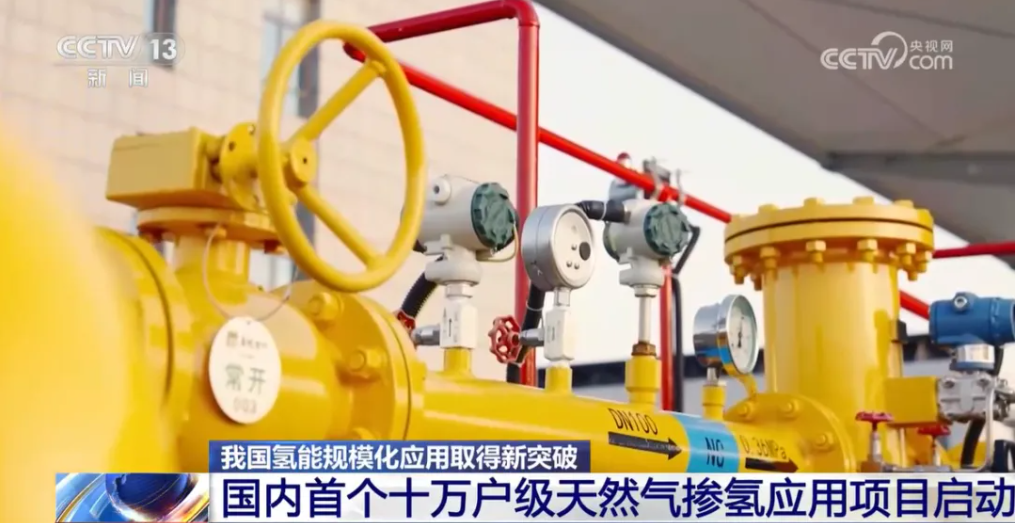
On April 19, China’s first large-scale hydrogen blending project serving 100,000 households and commercial users entered operation, marking a critical step in moving green hydrogen from industrial pilots into everyday urban consumption.
Part of the national “Hydrogen into Households” demonstration program, the project enables hydrogen-enriched natural gas to be delivered through existing pipelines and used in current appliances without modification. This convergence of technical readiness, infrastructure compatibility, and economic pragmatism positions the project as a milestone in the commercialization of hydrogen.
From pilot to scaled deployment
The Weifang initiative represents China’s first hydrogen-blending deployment at a six-figure household scale. Following five years of testing and system validation, it has transitioned from controlled demonstration to stable commercial operation.
The system integrates hydrogen production, blending, transmission, and digital monitoring into a unified urban energy architecture. Core characteristics include:
- Scale: 100,000 residential and commercial users
- Blending ratio: Dynamically adjustable from 0% to 10%
- End-use compatibility: No retrofit required for stoves, boilers, or heaters
- Operational validation: Long-duration closed-loop trials confirming safety and regulatory compliance
The absence of end-user retrofit is pivotal. Globally, appliance replacement has been a major cost barrier to hydrogen adoption; Weifang demonstrates a pathway that avoids it entirely.
A full-chain hydrogen ecosystem
Beyond scale, the project’s defining feature is its end-to-end integration—linking production, blending, transport, and system control.
I. Industrial-scale hydrogen production
The project is anchored by a 5,000 Nm³/h water electrolysis system, equivalent to approximately:
- ~450 kg of hydrogen per hour
- ~3,900 tonnes annually (on a continuous operation basis)
The system is engineered for:
- Flexible operation with intermittent renewable power
- Rapid ramp-up and ramp-down in response to grid conditions
- Stable efficiency under variable load
This enables effective utilization of curtailed wind and solar power, converting excess electricity into storable hydrogen.
II. Precision blending and combustion performance
A 30,000 Nm³/h hydrogen blending unit enables controlled injection into the natural gas stream, with:
- Dynamic adjustment between 0–10%
- Real-time response to supply-demand conditions
- High-precision sensing of flow and concentration
Operational data indicates that increasing hydrogen content:
- Reduces carbon monoxide emissions
- Maintains combustion stability within national standards
While hydrogen lowers volumetric heating value, its higher flame speed improves combustion characteristics, supporting safe integration at current blending levels.
III. Dedicated hydrogen transmission
A 5.2 km hydrogen pipeline, the first dedicated urban hydrogen transmission line of its kind in China, connects production and distribution nodes.
Key engineering features include:
- Hydrogen-compatible materials to mitigate embrittlement
- Advanced sealing and pressure regulation systems
- Seamless integration with existing gas infrastructure
Compared with tube-trailer delivery, pipeline transport reduces hydrogen logistics costs by approximately 80% while improving supply continuity and operational reliability.
IV. Digital monitoring and safety assurance
Ensuring safety at scale requires real-time system intelligence. The project incorporates a full-process digital monitoring platform that tracks pressure, flow rates, and hydrogen concentration:
- At second-level resolution
- Enabling immediate anomaly detection
- Supporting automated safety responses
- Allowing predictive maintenance
This digital layer is critical for deploying hydrogen blending in dense urban environments, where reliability thresholds are exceptionally high.
A scalable decarbonization lever
Beyond its local impact, the Weifang model illustrates how urban gas systems can function as distributed hydrogen “storage” and delivery networks. If scaled nationally, the implications are material:
- 10% hydrogen blending across urban gas consumption
- Replacement of ~15 billion Nm³ of natural gas annually
- Reduction of ~30 million tonnes of CO2 emissions
This is comparable to the annual emissions of a small‑ to mid‑sized European economy and represents a meaningful contribution toward China’s carbon‑neutrality targets.
Cost dynamics: narrowing the green premium
The project addresses one of hydrogen’s core challenges—cost competitiveness—through system-level efficiencies:
- Infrastructure reuse: Avoids large-scale pipeline replacement and appliance upgrades
- Transport optimization: Pipeline delivery significantly undercuts trucking costs
- Demand aggregation: Large, stable consumption reduces unit hydrogen cost
- Renewable integration: Converts otherwise curtailed electricity into value
Collectively, these factors narrow the cost gap between green hydrogen, fossil-based hydrogen, and natural gas, particularly in regions with high renewable penetration.
Weifang model: strategic significance
The Weifang project offers a pragmatic complement to conventional hydrogen strategies, which typically prioritize heavy industry, long-haul transport, or power generation—sectors characterized by high capital intensity and long deployment cycles. By contrast, hydrogen blending enables incremental decarbonization with immediate scalability and minimal consumer disruption.
A central insight is the value of legacy infrastructure reuse. Rather than requiring wholesale system replacement, the project demonstrates that existing gas networks can be upgraded through targeted investments in blending and monitoring technologies. This materially lowers both capital expenditure and implementation timelines while simplifying regulatory pathways.
At a global level, the project strengthens China’s position in the hydrogen economy. While Europe and the United States remain largely at pilot scale for blending, and Japan emphasizes dedicated hydrogen systems, Weifang establishes a new benchmark for urban hydrogen integration at scale. Its 100,000-user deployment signals a transition from experimentation to system-level application.
Crucially, the model aligns with national policy priorities—including carbon peaking and neutrality goals, hydrogen industry development plans, and urban energy transition frameworks. Given China’s extensive gas distribution networks, the approach is inherently replicable, provided local conditions—renewable availability, infrastructure compatibility, and regulatory support—are in place.
Value chain implications
The project catalyzes a multi-layered industrial ecosystem:
- Upstream: Electrolyzer manufacturers, renewable energy developers, hydrogen equipment suppliers
- Midstream: Gas utilities, pipeline operators, blending system providers
- Downstream: Residential users, commercial consumers, municipalities
- Cross-cutting: Digital monitoring providers, safety and certification bodies
This integrated value chain supports both domestic industrial development and potential export of technology and system design.
From pilot to infrastructure paradigm
The Weifang project signals a structural shift: hydrogen is no longer confined to niche applications but is emerging as a system-integrated energy vector embedded within existing networks.
Key developments to watch include:
- Higher hydrogen blending thresholds
- Integration with distributed energy systems
- Linkages with carbon pricing mechanisms
- Replication in other urban and international markets
The launch of China’s first 100,000-household hydrogen blending project in Weifang marks a commercial and strategic inflection point for the hydrogen economy.
By demonstrating that green hydrogen can be produced at scale, delivered cost-effectively, and consumed without behavioural change, the project addresses three of the sector’s most persistent barriers.
In doing so, it offers a practical, scalable blueprint for cities seeking to decarbonize existing energy systems—without the cost and disruption of wholesale infrastructure replacement.