Breakthrough demonstration of a 1 MW hydrogen turboprop engine on a 7.5-ton UAV signals transition from lab-scale validation to flight-tested reality, potentially reshaping low-altitude logistics and green aviation value chains.
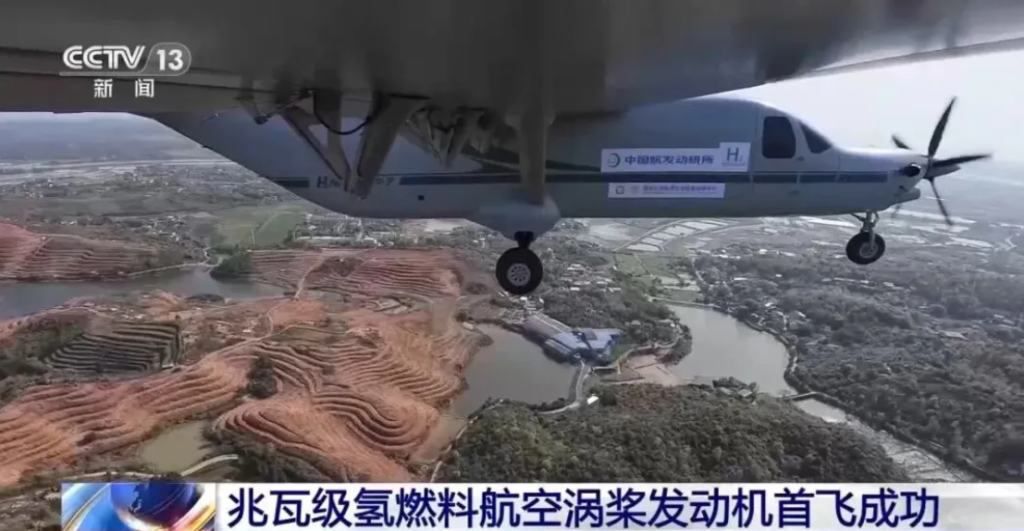
On April 4, a 7.5-tonne unmanned cargo aircraft lifted off from Zhuzhou Lusong Airport, powered by the AEP100, a megawatt-class hydrogen-fuel turboprop engine. The 16-minute flight covered 36 km at 220 km/h and reached an altitude of 300 metres, marking the world’s first successful flight test of a hydrogen aviation engine exceeding one megawatt.
Developed by the Aero Engine Corporation of China (AECC), the program represents a major national effort. Established in 2016 and backed by the Chinese central government alongside key aerospace stakeholders, including Aviation Industry Corporation of China (AVIC) and Commercial Aircraft Corporation of China (COMAC), AECC has rapidly emerged as one of the world’s leading aero-engine manufacturers.
Beyond its technical success, this milestone positions hydrogen propulsion as a potential pathway for scaling zero-carbon aviation, particularly in cargo and regional segments, while signalling China’s intent to lead in next-generation aerospace energy systems.
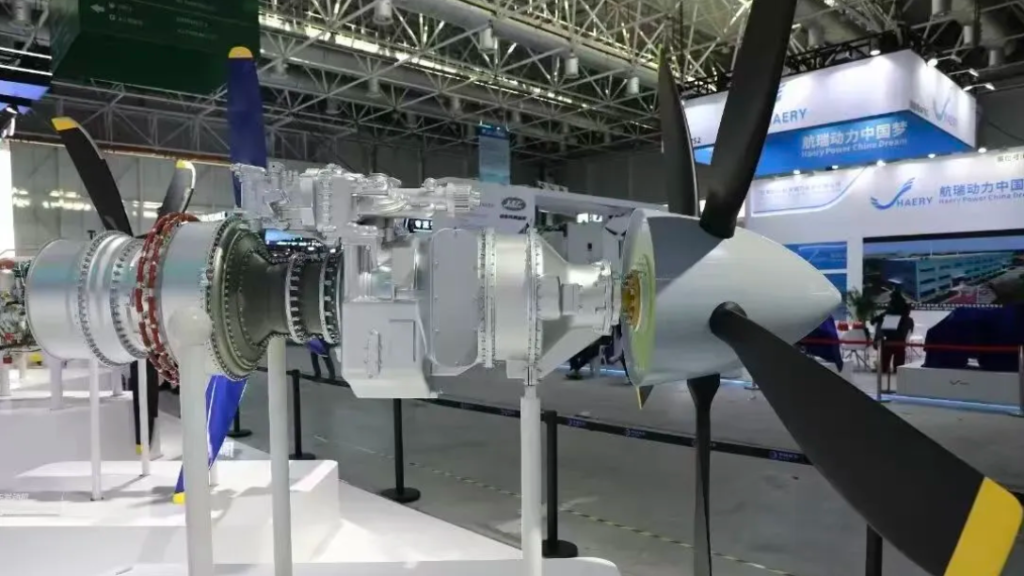
A step-change in hydrogen aviation
The AEP100 flight represents a critical leap from sub-megawatt hydrogen propulsion systems to full-scale aviation applications.
Until now, most hydrogen-powered aircraft, both in China and globally, have operated in the kilowatt to low hundreds-of-kilowatt range, typically serving niche applications such as inspection drones or short-range logistics. By contrast, the AEP100 exceeds 1,000 kW in output and powers a 7.5-tonne platform, moving hydrogen aviation into the realm of regional cargo transport.
Three data points highlight the significance:
- Power class: >1 MW, compared with <300 kW typical of prior hydrogen UAVs
- Aircraft scale: 7.5 tonnes, versus sub-1-tonne platforms previously
- Mission profile: 220 km/h cruise, suitable for intercity and island logistics
This is not merely incremental progress – it represents a categorical shift from experimental systems to operationally relevant aircraft.
From hydrogen combustion to system integration
This performance scale-up is underpinned by breakthroughs across multiple tightly coupled engineering domains. The AEP100’s success lies in overcoming several technical barriers that have historically constrained hydrogen-powered aviation.
I. Hydrogen combustion in turboprop architecture
Unlike fuel cells, which convert hydrogen into electricity, the AEP100 uses direct hydrogen combustion in a turboprop engine, leveraging existing gas turbine architectures while addressing hydrogen-specific challenges.
Hydrogen burns several times faster than conventional jet fuel, making it highly prone to flashback, detonation, and combustion oscillation – long considered among the biggest obstacles in hydrogen aero-engine development. The successful flight demonstrates that these combustion control challenges have now been effectively mitigated.
Engineering solutions include advanced combustor design, staged injection systems, and high-temperature-resistant materials, enabling stable combustion under real flight conditions.
II. MW-class power density
Achieving >1 MW output requires:
- High-efficiency compression and turbine stages
- Lightweight yet heat-resistant materials
- Optimized thermodynamic cycles for hydrogen fuel
The AEP100 achieves aviation-grade weight reduction alongside performance gains, improving power density while maintaining structural integrity, critical for enabling practical payload and range.
III. Hydrogen storage and delivery
A critical subsystem is onboard hydrogen storage. The program validated cryogenic liquid hydrogen storage, transport, and combustion integration – one of the most technically demanding aspects of hydrogen aviation.
Liquid hydrogen must be stored and transported at extremely low temperatures while coexisting with high-temperature turbine environments, an “ice and fire” engineering challenge at the system level.
Key challenges include weight penalties relative to jet fuel, thermal management of cryogenic systems, and safety systems for leak detection and containment.
The AEP100 program achieved breakthroughs in lightweight cryogenic system design, ensuring that storage does not compromise payload or flight range.
IV. Full-system integration
Perhaps most importantly, the flight validated end-to-end integration:
- Engine, fuel system, and aircraft platform
- Flight control compatibility
- Real-time performance stability
Developed by AECC’s Hunan Aviation Powerplant Research Institute, the engine demonstrated stable ignition and sustained operation under full test conditions, confirming readiness beyond laboratory validation.
Unlocking low-altitude logistics and beyond
The AEP100’s implications are most immediate in the emerging “low-altitude economy,” encompassing UAV logistics, regional mobility, and specialized aviation services. Notably, the “low-altitude economy” has been included in China’s government work report for three consecutive years, underscoring its strategic importance.
I. Heavy-lift UAV logistics
A 7.5-tonne hydrogen-powered UAV can:
- Replace diesel trucks in remote or island logistics
- Operate on cross-sea or mountainous routes
- Reduce dependence on traditional airport infrastructure
This creates a new logistics layer between ground freight and conventional air cargo. China’s hydrogen UAV market alone is projected to exceed CNY 14 billion by 2030, positioning it as a key growth engine within the low-altitude economy.
II. Cost trajectory and hydrogen economics
While hydrogen propulsion remains costlier than jet fuel today, its economics are improving:
- Green hydrogen costs projected to fall below $2/kg by 2030
- Lower maintenance due to cleaner combustion
- Reduced exposure to oil price volatility
III. Competing decarbonization pathways
Compared with sustainable aviation fuel (SAF), hydrogen offers near-zero carbon emissions rather than incremental reductions. Aviation decarbonization is increasingly coalescing around two primary routes:
- SAF blending: compatible with existing engines but limited in emissions reduction
- Hydrogen propulsion: disruptive, requiring new infrastructure but offering deeper decarbonization
The AEP100 strengthens hydrogen’s case, particularly for regional and cargo applications.
IV. Spillover into automotive hydrogen engines
Parallel efforts in hydrogen ICEs for heavy-duty trucks, by Chinese manufacturers such as FAW, Weichai, and Yuchai, suggest cross-sector technology transfer.
Advances in combustion control, thermal management, and lightweight materials from aviation are likely to accelerate the maturity of hydrogen engines in road transport. In turn, scaling in the automotive sector could help reduce system costs and improve supply chain readiness for aviation applications. This bi-directional spillover reinforces hydrogen’s broader role as a cross-industry decarbonization solution.
From CSU to Wuxi: an innovation ecosystem model
The AEP100 was developed by the AECC Hunan Aviation Powerplant Research Institute in Zhuzhou, one of AECC’s three core aero‑engine R&D entities. Long known for rail transit and power systems manufacturing, Zhuzhou has evolved into a testing ground for next‑generation propulsion technologies. The city is home to industrial leaders such as CRRC Zhuzhou and SANY Group, forming a robust industrial base.
Central South University (CSU) in Hunan, known for its strengths in metallurgy, materials science, and transportation engineering, plays a key role in anchoring this ecosystem, bridging fundamental research and industrial application, particularly in high‑performance alloys and hydrogen‑related materials.
This capability is being extended nationally, including through the Central South University National Technology Transfer Wuxi Center. Launched in 2025 in Liangxi District, Wuxi, the center is designed to shorten the timeline from laboratory discovery to industrial deployment through a “four-industrial chain alignment” model:
- Advanced materials
- Energy materials (including hydrogen systems)
- Information technology and AI
- Semiconductor packaging
In parallel, Liangxi District has established strong industry–academia collaboration with China’s leading universities, including Shanghai Jiao Tong University, Harbin Institute of Technology, University of Science and Technology Beijing, Northwestern Polytechnical University, and Beijing Institute of Technology. The introduction of doctoral teams and OPC projects in areas such as low-altitude aviation and AI is injecting strong innovation momentum into the Wuxi area.
This also reflects a shift from linear technology transfer to ecosystem-based integration, coordinating research, pilot testing, and commercialization across regions.
Wuxi’s “engines & turbines” cluster (i.e., aero-engines and gas turbines) further complements this model, forming a tightly linked innovation network with leading research hubs across China.
In December 2025, Mingyang Hydrogen in Wuxi brought the world’s first 30 MW hydrogen gas turbine into stable operation in Inner Mongolia, enabling a complete “electricity-to-hydrogen-to-electricity” (P2H2P) energy conversion cycle.
From demonstration to deployment
For AEP100, the next phase will determine whether hydrogen aviation can scale commercially. Key milestones include:
- Extended flight durations and higher altitudes
- Certification pathways for unmanned and eventually manned aircraft
- Hydrogen refuelling infrastructure
- Cost parity with conventional fuels
Initial adoption is likely in unmanned cargo, island and remote logistics, and specialized industrial applications.
Scaling hydrogen aviation
The AEP100’s first flight signals a transition from experimental validation to early-stage pilot in hydrogen aviation. By demonstrating megawatt-class performance in an integrated system, China has advanced both the technical and industrial foundations of zero-carbon flight.
Crucially, this breakthrough is not isolated. It is embedded within a broader innovation architecture, linking research institutions, industrial bases like Zhuzhou and regional hubs such as Wuxi, designed to accelerate the journey from scientific discovery to market deployment.
As infrastructure, certification pathways, and cost curves evolve, hydrogen propulsion may move from demonstration to deployment – reshaping not only aviation, but the wider clean energy economy.