Record renewable capacity additions, 1,000 TWh-scale wind and solar generation, and expanding green electricity markets are driving a new phase of China’s energy-system transformation.
The China Renewable Energy Development Report 2025, released on June 12, highlights another landmark year for the country’s clean energy transition. China accounted for more than 60% of global renewable capacity additions in 2025, while renewable electricity generation fully met the increase in national power demand associated with economic growth for the first time.
The findings underscore China’s accelerating shift from capacity expansion to large-scale integration and utilization of renewable energy across industry, transportation, and emerging low-carbon value chains. The sector is increasingly defined not only by deployment scale but also by advances in grid integration, market-based mechanisms, industrial decarbonization, and new business models such as green electricity trading, renewable hydrogen production, and zero-carbon industrial parks.
Renewable capacity hits record high
China’s installed renewable power capacity surpassed 2,337 GW in 2025, setting a new record. Renewable energy accounted for 82.7% of all newly installed power capacity nationwide, further cementing its position as the dominant source of power-sector investment.
Distributed solar photovoltaics remained a key growth driver, with annual additions exceeding 100 GW for the second consecutive year. The continued expansion of distributed solar reflects broader efforts to strengthen local renewable energy consumption and alleviate transmission constraints that have historically limited deployment in some regions.
China expects to add approximately 300 GW of new wind and solar capacity in 2026. This single-year addition would exceed the total installed power capacity of many major economies and further reinforce China’s position as the world’s largest renewable energy market.
Meanwhile, newly connected energy storage capacity is projected to exceed 50 GW in 2026, underscoring the growing importance of flexibility resources in supporting a power system with higher shares of variable renewable generation.
Wind and solar enter the 1,000 TWh era
Beyond capacity growth, the report highlights significant progress in renewable electricity generation. China’s renewable power generation reached approximately 3,990 TWh in 2025, up 9.6% year on year and accounting for 38.3% of total national electricity generation.
Most notably, both wind and solar power generation individually surpassed the 1,000 TWh threshold for the first time. Each source now contributes more than 10% of China’s total electricity output, marking a significant structural shift in the country’s energy mix.
The achievement reflects not only unprecedented deployment scale but also improvements in grid infrastructure, system operations, and renewable energy utilization. Enhanced local consumption mechanisms and distributed generation have increased renewable power absorption, reduced curtailment risks, and improved overall system efficiency.
The report characterizes this evolution as a transition from ensuring renewable projects can be built to ensuring they can be effectively consumed and integrated into the broader energy system.
Green power drives incremental growth
One of the report’s most significant findings is that renewable electricity generation added in 2025 fully covered the increase in nationwide electricity consumption.
For the first time, all incremental energy demand associated with economic growth was supplied by green electricity. This milestone represents an important step toward decoupling economic expansion from fossil-fuel-based energy consumption.
Its significance extends beyond the power sector. The development demonstrates that renewable energy is increasingly capable of supporting industrial growth, electrification, urbanization, and digital infrastructure expansion without requiring proportional increases in carbon-intensive generation.
From an energy-transition perspective, China is emerging as one of the clearest examples of large-scale renewable deployment supporting both economic growth and decarbonization objectives simultaneously.
Renewables move beyond power generation
The report also highlights the rapid diversification of renewable energy applications.
Historically, renewable energy served primarily as a source of electricity generation. Today, it is increasingly becoming a foundational input for broader industrial and environmental value chains. Key emerging applications include:
- Direct green power supply agreements between generators and industrial users
- Zero-carbon industrial parks
- Renewable-powered hydrogen production
- Solar-powered desert restoration and ecological rehabilitation projects
- Green transportation systems
- Low-carbon building operations
Among these, renewable hydrogen is attracting particular attention. Wind- and solar-powered electrolysis projects are emerging as an important pathway for utilizing surplus renewable electricity while producing low-carbon feedstocks for hard-to-abate sectors such as steel, chemicals, refining, and heavy transport.
This integration of renewable power and industrial decarbonization reflects a broader shift from an electricity-sector transition toward an economy-wide energy transition.
Market mechanisms gain momentum
The commercial ecosystem supporting renewable energy is also maturing rapidly.
China’s green certificate trading market recorded 930 million transactions in 2025, representing a doubling of trading volume compared with the previous year. The growth signals rising corporate demand for renewable energy attributes and increasing participation in market-based decarbonization mechanisms.
At the same time, policies supporting direct green power purchases, localized consumption, and green electricity trading continue to evolve. These measures are reducing reliance on subsidy-driven deployment models while encouraging more market-oriented investment decisions.
As a result, the sector is entering what the report describes as a new phase of “market-driven development and tech-enabled growth.” Future value creation is expected to depend increasingly on system optimization, energy storage, digital energy management, and market design rather than capacity expansion alone.
Global market implications
China’s renewable energy trajectory carries significant implications for global clean energy industries.
With more than 60% of global renewable capacity additions occurring in China, the country remains the primary driver of deployment scale, manufacturing growth, and technology cost reductions worldwide. Continued investment in large-scale wind, solar, storage, and transmission infrastructure is likely to further strengthen China’s position across critical clean-energy supply chains.
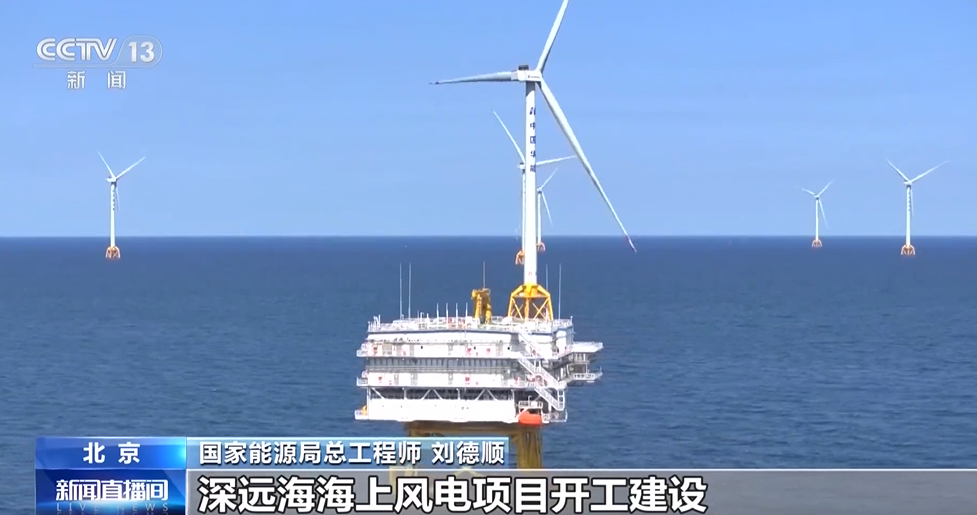
The country’s focus on large-scale desert renewable bases, offshore wind development, integrated energy systems, and energy storage deployment also offers a preview of how major power systems may evolve as renewable penetration reaches increasingly high levels.
For investors and clean-tech developers, the report signals that China’s renewable energy market is entering a more mature and sophisticated phase—one in which value creation will increasingly derive from integration, flexibility, industrial applications, and market innovation rather than deployment scale alone.
As renewable electricity becomes both the backbone of power generation and a key enabler of industrial decarbonization, China’s energy transition is moving from scale growth to system transformation shaping global energy markets.