FAW Hongqi has taken a significant step in China’s push toward next-generation electric vehicle batteries, unveiling its first vehicle equipped with a fully all-solid-state battery pack. Rolled off a pilot production line at the end of December 2025, the prototype signals that solid-state battery development in China is moving beyond lab research and into real-world vehicle validation.
The milestone places FAW among a small group of global automakers that have achieved vehicle-level integration of large-format all-solid-state cells, a stage widely regarded as one of the most difficult transitions in solid-state battery development.
From lab cells to a test vehicle
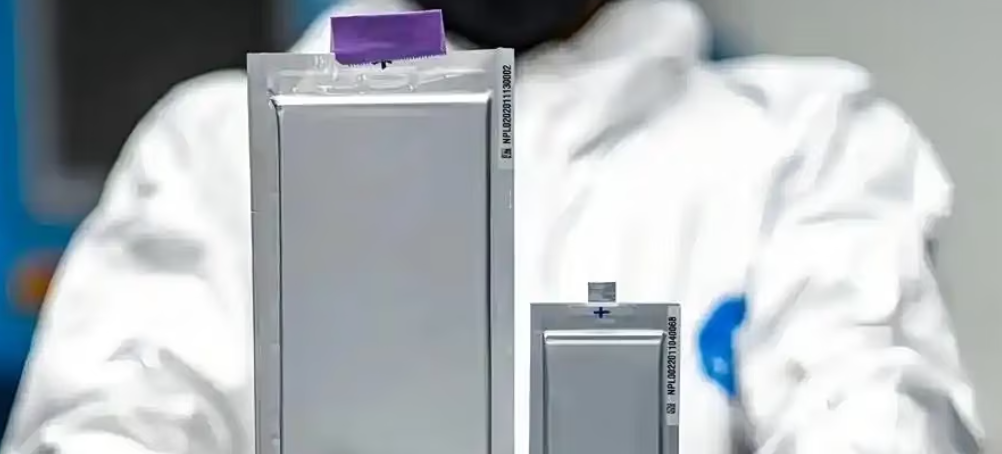
On December 31, 2025, FAW announced that the first all-solid-state battery pack independently developed by its R&D Institute had been successfully integrated into the Hongqi Tiangong 06 model. The vehicle rolled off a pilot production line, marking FAW’s formal entry into the vehicle-level testing phase for all-solid-state batteries, often described as the “holy grail” of power battery technology.
According to the company, the breakthrough followed an intensive 470-day R&D campaign that delivered progress across several long-standing bottlenecks, including sulphide solid electrolytes, large-capacity cell performance, and scalable manufacturing processes. The newly developed 66Ah all-solid-state cell has passed extreme safety validation, including a 200°C thermal abuse test. At the materials level, the ionic conductivity of the sulphide electrolyte exceeded 10 mS/cm, a benchmark commonly cited internationally as a threshold for practical application.
Crucially, the achievement extends beyond electrochemistry. FAW also reported advances in high-voltage module packaging and lightweight system integration, areas that have historically constrained the translation of solid-state battery research into automotive-grade systems.
A decade-long build-up behind the 470-day sprint
While the 470-day development cycle underscores execution speed, it understates the depth of preparation behind FAW’s solid-state battery programme. FAW began exploring all-solid-state battery pathways as early as 2014, well before solid-state technology entered the mainstream strategic agenda of the global automotive industry.
Key milestones include:
- 2019: Development of a solid-state battery module compliant with VDA size standards, enabling early vehicle integration studies.
- 2020: Completion of sample-level solid-state battery development and assembly of FAW’s first solid-state battery test vehicle.
- 2022: Successful assembly of a 10Ah large-capacity all-solid-state cell by FAW’s R&D Institute.
- 2024: Completion of independent development of core materials and 20Ah-class cells by a FAW-led solid-state battery innovation consortium.
- 2024–2025: Launch of provincial “open bidding” research programmes targeting 400 Wh/kg-class all-solid-state batteries across materials, cells, and systems.
Today, China FAW is collaborating with 27 partner institutions spanning universities, research institutes, and battery-related enterprises. Rather than relying on a single supplier, FAW has adopted a consortium-based approach—keeping core system integration, validation, and vehicle adaptation in-house while drawing on external expertise across the materials and manufacturing value chain.
FAW’s supplier strategy: semi-solid today, all-solid tomorrow
FAW’s solid-state roadmap follows a phased commercial strategy. In the near term, the group is relying on semi-solid-state batteries supplied by Farasis Energy, one of China’s leading power battery manufacturers and a long-term FAW partner. These semi-solid batteries are scheduled for commercial deployment from 2025, offering incremental gains in energy density and safety while production processes mature.
For fully all-solid-state batteries, however, FAW has strategically avoided locking itself into a single supplier. Instead, it is coordinating upstream materials research, cell development, and equipment localization through its industrial alliance. This approach reflects the current state of the technology: while chemistry pathways are converging, large-scale manufacturability, cost control, and yield stability remain unresolved across the industry.
By retaining control over pack integration and vehicle-level testing, FAW aims to reduce supplier lock-in risk while accelerating learning curves ahead of small-batch production.
Key technologies and scaling progress
I. Sulphide electrolytes cross a critical threshold
At the core of FAW’s technical progress is the use of sulphide-based solid electrolytes—one of the most promising, yet technically demanding, solid-state pathways globally. Sulphide electrolytes combine high ionic conductivity with favourable mechanical properties, enabling improved interfacial contact with electrodes. Their long-standing drawbacks—moisture sensitivity and processing complexity—have historically limited industrialization.
FAW’s reported conductivity exceeding 10 mS/cm suggests that these challenges are being addressed at a level compatible with automotive application, at least under controlled manufacturing conditions.
II. Scaling beyond the lab
Many solid-state battery breakthroughs stall at small-format cells. FAW’s progress is notable for its emphasis on capacity scaling:
- Initial validation at 10Ah
- Process breakthroughs at 60Ah
- Successful testing of a 66Ah all-solid-state cell
The 66Ah cell’s ability to pass a 200°C thermal abuse test highlights the intrinsic safety advantages of solid electrolytes over flammable liquid systems—one of the core value propositions of solid-state batteries from both regulatory and consumer perspectives.
III. System integration and lightweighting
FAW also reported progress in high-voltage module packaging and lightweight system integration. Solid-state batteries typically require higher stack pressure, precise interface control, and redesigned module architectures. Advances in these areas indicate that the programme is addressing manufacturability and vehicle integration challenges, not merely laboratory performance metrics.
The 1,000 km question
FAW has not disclosed full pack-level specifications. However, industry estimates suggest that mature all-solid-state battery packs could enable driving ranges exceeding 1,000 kilometres under standard test cycles for vehicles in the Tiangong 06 class.
Key expected advantages include:
- Intrinsic safety: Solid electrolytes eliminate flammable liquids, sharply reducing fire and thermal runaway risk.
- Higher energy density: Greater energy storage within the same volume supports significantly longer driving range.
- Low-temperature resilience: Solid electrolytes generally exhibit less conductivity degradation at sub-zero temperatures, addressing a persistent weakness of current EVs in northern China and other cold-climate markets.
Fast-charging capability remains a longer-term promise. While theoretically compelling, it is still undergoing system-level validation across the industry.
Commercial relevance and policy alignment
FAW’s announcement comes amid a broader acceleration of solid-state battery development across China. Provincial governments, including Jilin, have elevated solid-state batteries to strategic technology status, launching competitive funding programs with explicit targets for energy density, safety performance, and domestic supply-chain localization.
These policy signals align closely with FAW’s consortium-driven approach, reinforcing both technological development and industrial resilience.
From promise to proof
For FAW, solid-state batteries represent more than a technology upgrade—they are a strategic lever for differentiation and potential leapfrogging. The roadmap is explicit: semi-solid batteries in 2025, small-batch all-solid-state deployment around 2027, and installation in FAW Hongqi’s flagship sedan and SUV models by the end of that year.
If vehicle-level validation continues to progress as planned, FAW’s latest prototype may mark the transition of all-solid-state batteries in China from long-term promise to early industrial reality.