Chinese equipment maker collaborates with suppliers to co-develop and scale battery manufacturing solutions amid accelerating global energy storage demand.
LEAD Intelligent Equipment convened more than 300 global suppliers in Wuxi for its annual supplier conference, signalling a shift from transactional procurement to co-engineered innovation as demand for battery and energy storage systems enters a rapid expansion phase.
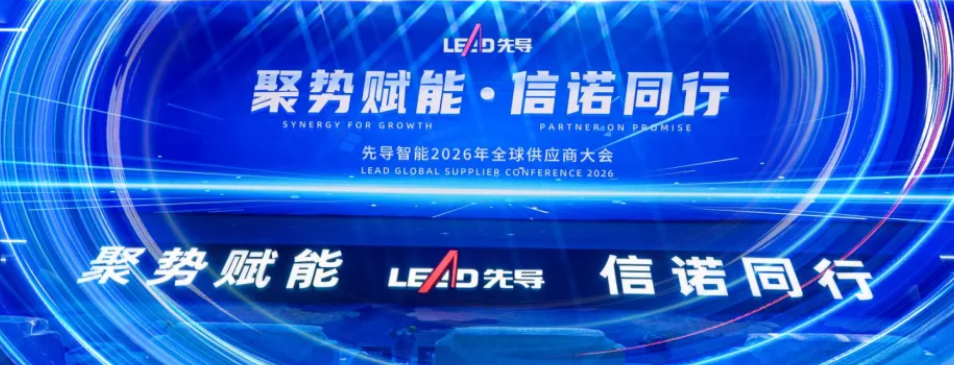
On March 31, the LEAD Global Supplier Conference 2026 set out a structured collaboration framework spanning joint R&D, resource prioritization, and digital supply chain transformation. The initiative follows a year of strong financial performance and comes as the global battery manufacturing ecosystem faces increasing pressure on capacity, delivery timelines, and cost efficiency.
A supplier summit with strategic intent
LEAD used the event not merely as a ceremonial gathering, but as a platform to redefine its operating model with upstream partners. While LEAD’s core management team welcomed representatives from more than 300 core suppliers, it also outlined four strategic shifts:
- From joint development to technology co-creation
- From broad-based cooperation to resource prioritization
- From transactional engagement to long-term value alignment
- From fragmented sourcing to integrated global delivery networks
The company also signed multiple strategic agreements with key partners, formalizing deeper integration across its manufacturing value chain. This repositioning reflects a broader industry trend: as battery demand scales, equipment makers are evolving into system integrators, requiring tighter coordination across precision components, automation systems, and digital platforms.
Growth, capital and demand tailwinds
LEAD’s supplier strategy is underpinned by strong financial momentum. In 2025, the company reported:
- Revenue of CNY 14.44 billion (+21.8% year-on-year)
- Net profit of CNY 1.56 billion (+446.6% year-on-year)
This performance significantly outpaced industry averages, reflecting both robust demand and operating leverage.
Capital market positioning
LEAD’s dual A+H listing, including its February 2026 Hong Kong debut (0470.HK), provides:
- Broader access to international capital
- Greater balance sheet flexibility
- Enhanced credibility with global clients and suppliers
This is particularly relevant in a sector characterized by large upfront investments and long project cycles.
Demand drivers: energy storage accelerates
The conference highlighted a structural shift in demand, driven by:
- Rapid expansion of utility-scale (“front-of-the-meter”) storage
- Growth in commercial and industrial (C&I) systems
- Policy-led deployment across major markets
Global energy storage installations are expected to grow at a 20–30% CAGR through 2030, led by China, the US and Europe. For equipment providers, this translates into larger order volumes, compressed delivery schedules, and higher expectations for reliability and scalability.
From cost efficiency to capability matching
LEAD’s supplier framework marks a shift from cost-based procurement to capability-driven allocation. High-performing suppliers gain larger orders, earlier project involvement, and access to joint development programs, creating a tiered ecosystem that scales alongside the company.
Deeper R&D co-development enables faster innovation, customized modules and lower integration risk, critical for next-generation technologies such as high-nickel and solid-state batteries.
At the same time, LEAD is building multi-regional supply chains, localized service capabilities and standardized quality systems, improving resilience and delivery speed while reducing geopolitical and logistics risks.
Collaboration in a consolidating market
Taken together, these initiatives signal a shift from operational optimization to ecosystem orchestration. LEAD’s trajectory mirrors that of global peers moving up the value chain, from component suppliers to system integrators and ultimately process partners, raising switching costs and strengthening long-term customer relationships.
At the same time, supply chain resilience is emerging as a key competitive differentiator. As demand accelerates, delivery capability, not just technology, has become a primary constraint. Companies that can coordinate suppliers, maintain consistent quality and execute against compressed timelines are likely to capture greater market share, while rising technical and scale requirements may accelerate consolidation among weaker suppliers.
These dynamics are closely tied to structural growth drivers, including transport electrification, renewable energy integration and grid flexibility. Against this backdrop, LEAD’s focus on deep supply chain integration positions it to move beyond equipment provision toward ecosystem orchestration, embedding suppliers into its innovation and delivery processes while retaining strategic control.