The financing supports the startup’s efforts to industrialize sub-20K cryogenic technologies, linking commercial hydrogen, space launch, and fusion research through domestically developed ultra-low-temperature systems.
In January, Sinoscience Clean Energy Technology completed a nearly CNY 500 million (approx. US$70 million) Pre-A++ financing round, among the largest early-stage raises to date in China’s hydrogen and deep-cryogenic equipment market.
Founded in 2022, Sinoscience Clean Energy focuses on cryogenic systems operating below 20 kelvin, a temperature regime critical for liquid hydrogen, liquid helium, and quantum-grade sensing. The company is backed by China General Nuclear Capital, Henan Aerospace Industry Fund, and research partners such as the Energy Institute of the Hefei Comprehensive National Science Center.
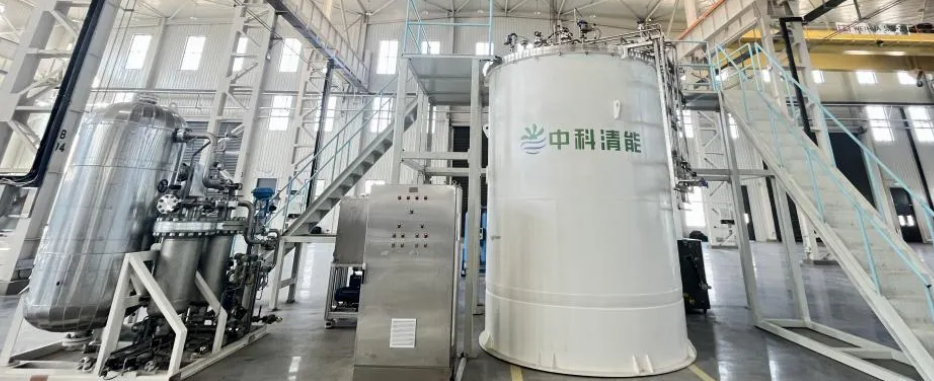
A strategic focus on deep cryogenics
Proceeds from the Pre-A++ round will be directed toward R&D and engineering delivery of higher-capacity liquid hydrogen systems, which are expected to become China’s largest fusion-related refrigeration system, and multiple critical cryogenic subsystems for national “big science” facilities. Funding will also support the industrialization of third-generation quantum cryogenic sensing systems and the construction of the Phase II manufacturing centre.
The scale and timing of the raise are notable. Within China’s cleantech landscape, sub-20K cryogenics sits at the intersection of hydrogen policy, space launch capability, and long-term fusion ambitions—sectors that tend to attract strategic capital with longer investment horizons. The transaction reflects investor confidence that Sinoscience Clean Energy’s technology roadmap can deliver near-term commercial traction while also underpinning longer-cycle national infrastructure projects.
Key technologies and product milestones
Sinoscience Clean Energy’s core capability lies in the design and manufacture of fully integrated cryogenic systems spanning the 20K-to-near-absolute-zero range. Its platforms integrate compressors, cold boxes, heat exchangers, turbo-expanders, control software and ultra-low-temperature sensing hardware into turnkey solutions.
In hydrogen liquefaction, the company achieved a domestic first in 2023 with the rollout of a 1-ton-per-day (1 TPD) hydrogen liquefaction unit. Delivered in 2024 to the Hainan International Commercial Aerospace Launch Center, the system became the first fully domestically produced hydrogen liquefier deployed at a Chinese spaceport. Since March 2025, all Long March-8 launch missions at the site have been supported by Sinoscience Clean Energy’s liquid hydrogen supply, providing operational validation under mission-critical conditions.
Building on this foundation, the company completed a 5-TPD hydrogen liquefaction system in 2024. The associated liquid hydrogen plant is scheduled to enter commercial operation in September 2026 and, if delivered on schedule, would become China’s first commercially operating facility at this scale. While modest by global benchmarks, it represents a critical step in China’s domestic scale-up pathway and lays the foundation for Sinoscience Clean Energy’s ongoing design of a 35-TPD system.
In fusion and helium cryogenics, Sinoscience Clean Energy delivered a 3 kW @ 4.5 K helium refrigerator to the national CRAFT facility (Comprehensive Research Facility for Fusion Technology), marking a critical breakthrough in China’s ability to domestically supply fusion-grade cryogenic infrastructure — an area previously dominated by multinational industrial gas companies such as Air Liquide and Linde.
Complementing these large systems is a growing portfolio of deep-cryogenic sensing solutions. The company has delivered more than 200 ultra-low-temperature sensing systems, deployed across national laboratories and major scientific facilities. These systems provide high-precision temperature, pressure and flow monitoring across millikelvin-to-kelvin ranges, supporting stable operation in fusion, quantum and superconducting applications.
Commercial relevance and cost dynamics
From a commercial perspective, Sinoscience Clean Energy occupies a strategic position across several emerging value chains. In liquid hydrogen, liquefaction typically accounts for 25–35% of total delivered hydrogen cost, reflecting both high energy intensity and capital requirements. Domestically manufactured equipment that reduces upfront capex, shortens maintenance cycles, and localizes spare parts can materially improve system economics, particularly for aerospace, industrial gas, and future heavy-transport applications.
The company’s 1-TPD and 5-TPD platforms allow it to address early-stage demand while accumulating operational data and engineering experience ahead of larger-scale deployments. Given China’s policy framing of hydrogen as a strategic energy carrier, this incremental scaling approach offers a credible pathway toward higher-capacity systems.
In fusion and large-scale scientific infrastructure, the commercial model differs. Customers are primarily state-funded research institutions, projects are capital-intensive, technical specifications are exacting, and supplier switching costs are high. Successful delivery therefore creates durable customer relationships and opens pathways into adjacent markets such as superconducting magnets, particle accelerators, and advanced medical imaging.
The company’s end-to-end localization, from core components to control software, also reduces exposure to export controls and supply chain risks, an increasingly important consideration for critical national projects.
Strategic and market implications
At a strategic level, the financing reflects China’s efforts to internalize ultra-low-temperature capabilities as enabling infrastructure for future energy and science systems. Liquid hydrogen is integral to reusable launch vehicles and long-duration energy storage; helium cryogenics underpin experimental and future commercial fusion reactors; and millikelvin-level sensing is foundational for quantum computing and advanced superconducting technologies.
By concentrating on the sub-20 K niche, Sinoscience Clean Energy avoids direct competition with mass-market industrial refrigeration and instead builds defensible advantages through systems integration, reliability, and application-specific engineering. Its roadmap, spanning ultra-large hydrogen liquefiers for green power scenarios and fusion-scale helium cryogenic systems, aligns closely with national plans to couple renewable electricity with hydrogen and to advance fusion from experimental platforms toward engineering demonstration.
Though still smaller than multinational incumbents, Sinoscience Clean Energy’s trajectory illustrates how targeted capital, supportive policy, and application-driven demand can accelerate development timelines. For climate investors and policymakers, the trend is clear: cryogenics, often overlooked in hydrogen plans, is emerging as a critical enabling layer in the energy transition and scientific competitiveness.