Pangu’s sodium-ion cylindrical batteries are accelerating cleantech expansion, serving EV, energy storage, and UPS markets as sodium-ion technology carves out cost-competitive, cold-tolerant niches.
Just days before the Lunar New Year, the shop floor at Wuxi-based Pangu New Energy remained busy. Robotic arms wound and sealed cylindrical sodium-ion (Na-ion) cells at high speed, technicians ran automated diagnostics, and stacks of finished batteries awaited shipment.
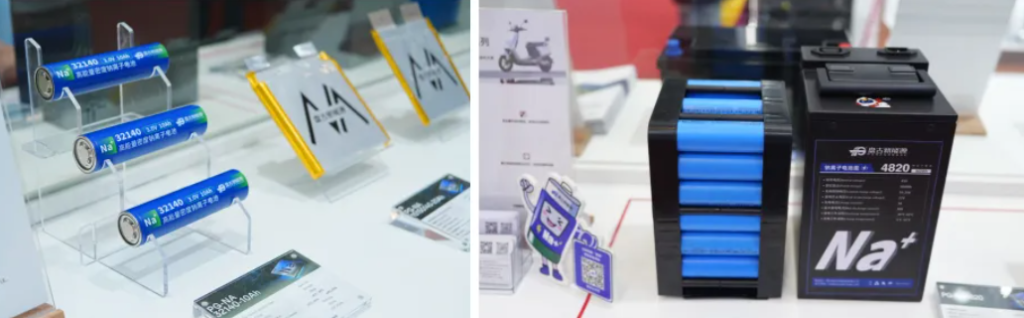
Production of the company’s 32-series cylindrical Na-ion cells, rated for extreme low temperatures and multi-application use, is already sold out – demonstrating strong demand for next-generation energy storage technologies.
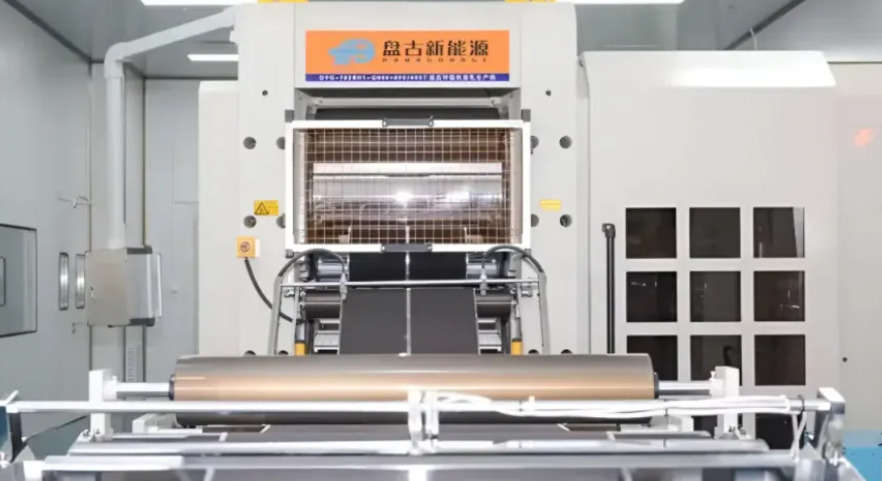
The rapid industrialization of Na-ion batteries highlights China’s deepening foothold in the global battery industry. Unlike traditional lithium-ion technologies, Na-ion chemistries leverage abundant sodium resources, offer enhanced safety and low-temperature performance, and are increasingly deployed in electric vehicles, energy storage systems (ESS), uninterruptible power supplies (UPS), and other applications.
Industrial scaling meets market demand
Founded less than three years ago, Pangu New Energy has advanced rapidly from prototype development to large-scale manufacturing. After securing capital commitments from the Wuxi government in 2023 to establish an R&D headquarters and a sodium-ion battery production base with a planned annual capacity of 5 GWh, the company completed trial runs and began commercial deliveries in late 2025.
Today, Pangu operates one of the largest Na-ion cylindrical battery production lines globally. It plans to double the output of its 32-series cells to 30,000 units per day in the first quarter of 2026 – with a 60-series production line, tailored for low-speed vehicle applications, scheduled to launch in the second quarter.
Pangu’s batteries are already deployed across diverse real-world scenarios, including logistics vehicles, low-speed EVs, UPS systems, and a community battery-swap station in Wuxi. There, 20 swap cabinets and 240 Na-ion battery packs support high-frequency charging and swapping for delivery tricycles and scooters.
Commercial momentum is reinforced by strong shipment growth, export orders to the US, UK, and Germany, and an expanding intellectual property portfolio. The company has filed more than 100 patents, with over 40 granted, and shipped more than 2 million batteries in 2025, positioning it as a significant player in China’s growing Na-ion battery market.
Technical performance nuance
Sodium-ion batteries represent a distinct technological pathway from lithium-ion chemistry. By replacing lithium with sodium, about 450 times more abundant and substantially cheaper, manufacturers unlock potential cost advantages while improving safety and low-temperature resilience.
Pangu’s cylindrical 32-series cells are engineered for extreme conditions. They retain capacity and deliver reliable power at temperatures as low as –40°C, a notable advantage over many lithium-ion batteries that experience significant performance degradation in cold climates. Sodium-ion chemistry also reduces thermal runaway risks due to sodium’s lower reactivity, contributing to improved intrinsic safety. This wide operating range makes the technology well-suited for outdoor logistics and distributed energy storage deployments.
Industry benchmarks place commercial Na-ion energy density at around 140 Wh/kg for mid-tier products and approximately 175 Wh/kg for advanced models, approaching lithium iron phosphate (LFP) cells at roughly 185 Wh/kg. Leading manufacturers such as CATL have also demonstrated cycle life exceeding 10,000 cycles and rapid-charging capabilities in next-generation sodium-ion platforms.
For end users, this performance profile translates into reliable cold-weather starts, stable voltage curves, and robust cycling under intensive use. In logistics swap applications, characterized by frequent insertion and removal, vibration, and outdoor exposure, Pangu reports that its battery packs maintain more than 99 percent capacity retention after 300 cycles in real-world use, highlighting both mechanical and electrochemical durability.
Market, policy, and cost edge
The commercial momentum behind sodium-ion batteries in China reflects both market demand and policy support. Government initiatives promoting domestic cleantech manufacturing, grid storage, and energy diversification have accelerated deployment at scale. Planned large-scale Na-ion ESS projects, including hybrid integration with lithium-ion systems exceeding 200 MW, signal growing confidence in grid-level applications.
Industry forecasts project the global Na-ion battery market expanding from approximately 10 GWh in 2025 to more than 290 GWh by 2034. China is expected to account for over 90 percent of global production capacity by 2030, underscoring strong industrial concentration.
From a value-chain perspective, sodium-ion technology benefits from lower raw material costs. Sodium carbonate and iron- or manganese-based cathode materials are significantly less expensive than lithium, nickel, or cobalt, supporting potential system costs near $40 per kWh at scale. This cost structure enhances competitiveness in price-sensitive segments such as low-speed mobility and stationary storage.
Pangu’s customer portfolio spans domestic low-speed mobility manufacturers, industrial equipment operators, energy storage integrators, and infrastructure partners piloting battery-swap networks. Its dual-channel sales model, direct supply to core OEM customers combined with regional distributor networks, supports scalable market penetration, while exports to Western markets continue to expand its international footprint.
Disruption and differentiation
The entry of sodium-ion batteries into mainstream applications, from micro EVs to distributed energy storage, is reshaping segments long dominated by lithium-ion technologies. Although Na-ion still trails LFP and nickel manganese cobalt (NMC) batteries in energy density, its advantages in safety, cold-weather performance, and raw material costs create a compelling value proposition in cost-sensitive and extreme-climate markets.
Pangu’s rapid scaling aligns with broader industry trends, as major players such as CATL and BYD invest heavily in sodium-ion R&D and production capacity. As the technology matures, sodium-ion batteries could capture a meaningful share of the LFP segment, particularly in cold-climate EVs, logistics fleets, and grid storage applications, with implications for global mineral supply chains and battery cost curves.
More broadly, sodium-ion’s emergence challenges conventional assumptions about battery performance trade-offs. By prioritizing cost efficiency, safety, and operational reliability over peak energy density, sodium-ion technology may help ease pressure on lithium supply chains, reduce reliance on critical minerals, and accelerate electrification across a wider range of applications.