New products combine enhanced structural durability, lightweight design, and certified reliability, addressing key barriers to large-scale perovskite deployment across utility-scale, rooftop, and distributed energy markets.
On June 3, global perovskite leader UtmoLight unveiled two new products designed to accelerate the commercial-scale adoption of perovskite photovoltaics:
- The ultra-lightweight S1-Feiyu (“Flying Feather”) module
- The high-strength S2-Xuanjia (“Black Armor”) module
The launch marks a significant step in the industry’s transition from pilot-scale demonstrations to large-scale deployment across diverse climates and application environments. It also reflects a broader evolution within the perovskite sector.
While record conversion efficiencies have dominated industry headlines for years, manufacturers are increasingly focusing on reliability, durability, and application-specific performance – factors that will ultimately determine commercial adoption, project bankability, and large-scale market penetration.
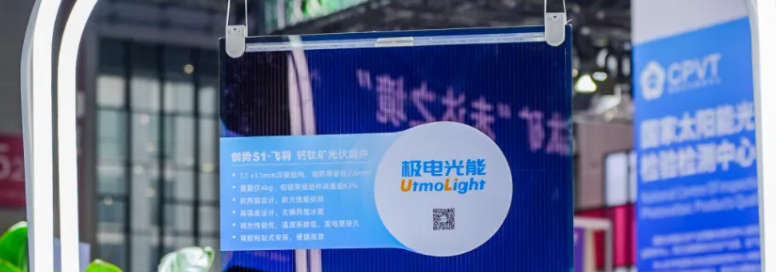
S1-Feiyu: ultra-light module for BIPV
The 0.72 m² S1-Feiyu (“Flying Feather” in Chinese) is an ultra-lightweight module designed for rooftop, building-integrated photovoltaic (BIPV), and mobile energy applications.
The product employs a 1.1 mm + 1.1 mm dual-glass structure, resulting in a total thickness of just 2.6 mm and a weight of only 4 kg, more than 62% lighter than conventional photovoltaic modules.
The lightweight design addresses a major constraint in distributed solar deployment. Many commercial and industrial buildings lack sufficient structural capacity to support traditional solar systems without costly reinforcement. By significantly reducing weight and enabling adhesive mounting, the S1-Feiyu expands deployment opportunities across older buildings, lightweight industrial facilities, logistics centers, transportation infrastructure, and temporary structures.
The design also offers the potential to reduce balance-of-system costs, simplify installation, and shorten project development timelines.
Performance with enhanced economics
Despite its lightweight architecture, UtmoLight says the S1-Feiyu maintains strong power-generation performance through the company’s proprietary Jichuang+ technology platform.
Key characteristics include:
- Strong low-light performance
- Low temperature coefficient
- Stable all-day energy generation
- Enhanced suitability for distributed generation applications
These features are particularly valuable in urban environments, where shading, variable irradiance, and non-optimal installation angles can affect system output. Perovskite technology’s inherent advantages under low-light conditions may further enhance energy yields compared with conventional silicon-based solutions, especially in distributed and building-integrated applications.
By combining lightweight construction with reliable energy production, the S1-Feiyu seeks to translate structural advantages into long-term economic value for building owners and project developers.
S2-Xuanjia: high-strength for extreme environments
The flagship product, the S2-Xuanjia (“Black Armor”), is described by UtmoLight as the industry’s first high-strength perovskite module utilizing tempered-glass construction.
The 2.81 m², 500 W module incorporates 3.2 mm tempered glass, the Jichuang+ technology platform, and an optimized functional-layer architecture, enabling a front-side mechanical load capacity of 5,400 Pa.
This level of structural performance positions the module for deployment in demanding environments, including:
- Typhoon-prone coastal regions
- Heavy snowfall and high-altitude areas
- Cold-climate northern markets
- Utility-scale projects exposed to high wind-induced vibration loads
Mechanical durability remains a critical challenge for thin-film photovoltaic technologies, where repeated environmental stress can increase the risk of cracking and performance degradation. By enhancing structural resilience, UtmoLight aims to reduce failure rates under wind and snow loads while expanding the geographic range of viable perovskite deployments.
TÜV Rheinland certification sets new reliability benchmark
A central feature of the launch was third-party validation from TÜV Rheinland, which awarded the S2-Xuanjia module certification, recognizing its contribution to advancing perovskite module reliability.
Testing demonstrated performance beyond conventional industry requirements. The module successfully passed:
- Front-side static load testing at 5,400 Pa
- Rear-side static load testing at 2,400 Pa
- Hail impact testing using 45 mm hailstones travelling at 33.9 m/s
- Fire safety testing
- Hot-spot resistance testing
The hail-resistance test significantly exceeded standard IEC requirements, which typically employ 25 mm hailstones. Following testing, no cracks were observed on the module surface.
According to UtmoLight, the module’s impact resistance is capable of withstanding conditions equivalent to severe typhoon events exceeding Level 15 (167–183 km/h). The company also noted that the module maintained strong performance following testing, demonstrating both structural integrity and operational reliability.
For project developers, insurers, and financiers, such third-party certification is particularly important. Independent validation helps reduce perceived technology risk, supports future bankability assessments, and may ultimately lower financing costs for commercial projects deploying next-generation photovoltaic technologies.
Strategic implications for the perovskite industry
The launch underscores a broader shift in the global perovskite industry. While early competition centred on laboratory efficiency records, the next phase of commercialization will be determined by the industry’s ability to deliver reliable, application-ready products capable of meeting real-world operating requirements.
The two new modules target distinct but high-potential market segments:
- Utility-scale solar projects in harsh operating environments, where durability directly impacts project economics
- Building-integrated and lightweight distributed solar applications, where structural constraints often limit conventional PV deployment
This dual-market strategy reflects a wider trend across the renewable energy sector, where product differentiation increasingly depends on application-specific value creation rather than efficiency metrics alone.
For China, which continues to lead global investment in next-generation photovoltaic manufacturing, advances in module reliability and safety could accelerate perovskite industrialization and strengthen the country’s position in emerging solar technologies. The TÜV-certified durability credentials also provide a foundation for future bankability assessments, potentially lowering financing costs and increasing investor confidence.
Based in Wuxi, UtmoLight is a member of the Wuxi Space-Based Solar Power Industry Alliance (WSSA). The company’s product launch also highlights the rapid maturation of perovskite technology, supported by Wuxi’s advanced solar manufacturing ecosystem, which is increasingly focused on next-generation, high-value technologies such as perovskite-silicon tandem cells, advanced photovoltaic materials, and future space-based solar power systems.